Honest answers to the questions readers ask first.
No. We are not the gatekeepers of who is saved — Yahuah (God) is. Salvation comes through faith in Yahusha (Jesus) the Messiah (Christ). What we are saying is that the systems that have shaped your understanding of him have buried things he asked his people to keep, and the burial has consequences the systems do not talk about.
The 1234 of Truth — 1 John 2:3–4 — names this directly: “Hereby do we know that we know him, if we keep his commandments. He that saith, I know him, and keepeth not his commandments, is a liar, and the truth is not in him.” That is the standard the Word itself provides. We did not write it. We read it. It is not a checklist — it is a spirit, and the spirit goes deeper than profession.
So the question is not whether you are saved. The question is whether the version of the gospel you have been handed includes everything Yahusha (Jesus) actually said about following him. We are inviting you to read the Word for yourself with the inherited filters set down for a moment, and to test what you find against everything you have been told. The Father will guide what comes next. He always does.
We share certain conclusions with parts of those movements — that the commandments still stand, that Yahusha (Jesus) is the prophesied Messiah (Christ) of Yashar’el (Israel), that the scattered seed of Yashar’el (Israel) is real. But we are not those movements, and we critique them.
The Hebrew Roots and Messianic camps inherited replacement theology from Christianity and carried it out the door without examining it. Many teach what we call the False Inclusion Gospel — that anyone who believes and Torah-keeps is thereby counted as Yashar’el (Israel). That sounds generous. It is Christian replacement theology in Torah clothing. It replaces the physical covenant heritage of the scattered seed with a spiritual credential. The prophets named the people they promised to gather — by tribe, by lineage, by exile, by name. Faith does not confer that lineage. Practice does not confer it. The Father knows his own.
We hold to the three categories the prophets actually taught — Yahudah (Judah), the scattered seed of Yashar’el (Israel), and the nations — not the Yahudi-(Jew)-and-Gentile binary that all four religious systems share. The four costumes are Christianity, Judaism, Hebrew Roots / Messianic, and Islam. All four deny the gathering of the twelve tribes in some form. We do not belong to any of them.
No. Justification — being made right with Yahuah (God) — is by faith in the Messiah’s (Christ’s) atoning work. Abraham was counted righteous before he was circumcised (Genesis 15:6 before Genesis 17). The promise cannot be undone by the Torah that came 430 years later (Galatians 3:17). That has always been true and remains true.
What we hold is that the question how is a person justified and the question how does a justified person live are two different questions. The Reformation collapsed them into one and answered both with “faith alone,” producing the antinomian gospel — the gospel of grace without covenant life. The first-century Judaizers collapsed them into one and answered both with “works of the law,” producing the flesh-performance gospel. Both collapses are wrong.
The new covenant of Jeremiah 31:33 is Torah written on the heart by the Ruach HaKodesh (Holy Spirit) — not Torah abolished. The Ruach HaKodesh (Holy Spirit) who lives in the believer is the same Ruach HaKodesh (Holy Spirit) who spoke at Sinai. He does not lead in two directions. “I will put my spirit within you, and cause you to walk in my statutes” (Ezekiel 36:27). Grace is the means by which Yahuah (God) returns his children to him and to his ways. It is not the alternative to those ways. The faith that saves and the life that follows are one motion, not two competing answers.
No to both. We did not become Yahudim (Jews). We did not convert to Judaism. We are not under any rabbinic authority. We are not asking anyone else to convert.
“Judaizing” had a specific meaning in Paul’s day. The Judaizers in Galatia were teaching that ritual circumcision into the house of Yahudah (Judah) was the door to salvation — that becoming a Yahudi (Jew) saved you. Paul rebuked that gospel because it denied that the scattered seed of Yashar’el (Israel) had a covenant heritage of their own to come home to. The flesh-credential gospel of become one of us and be saved is what Paul fought, and it is the same gospel modern institutional Christianity preaches in different costume — be baptized, become a Christian, join the right denomination, and be saved. Same architecture, different ritual.
What we teach is the third option both the Judaizers and modern Christianity deny: there is a scattered seed promised to be gathered, the gathering is happening, and what looks to outsiders like “becoming Yahudi (Jewish)” is the divorced northern house remembering who they are. The walk is not a conversion. It is a homecoming.
We are not anti-Christian people. We are against the system that has been asking the serpent’s Genesis 3 question — did Yahuah (God) really say? — from its pulpits for seventeen centuries. The system is one thing. The people inside it are another.
Our grandmothers prayed in the system. Our parents found Yahusha (Jesus) in the system. Sincere people have given their lives to the system in the name of the Messiah (Christ). They are not the enemy. They are family. They are the lost sheep — the same lost sheep Yahusha (Jesus) said he came for. They inherited the deception in good faith from teachers who inherited it from teachers before them.
What we are unwilling to do is pretend that institutional Christianity got the spine of the matter right. Constantine’s Sunday law in 321, the Council of Laodicea in 363, and seventeen centuries of teaching that the commandments Yahuah (God) gave were abolished — these are the system. We dismantle the system with the Word. We extend our hand to the people. Jeremiah 16:19 — “Surely our fathers have inherited lies, vanity, and things wherein there is no profit” — applies to all of us, including those of us who walked out of the system years ago.
We are neither. Three positions are common on this question, and all three are wrong.
Yahudi-(Jew)-hatred is wrong. Scripturally indefensible. Spiritually dangerous. A tool of the enemy used to misdirect people away from the truth. The harsh language some find in the Gospels and Epistles is directed at sons of Belial operating within the covenant community — identifiable by their works, not their bloodline. Nothing in the New Testament is new. Every concept roots in the Torah and the prophets, where the same pattern of sons of Belial within Yashar’el (Israel) appears from the beginning. The Yahudim (Jews) are family. We do not hate family.
Zionism as a theological program is also wrong. It conflates a modern political project with the prophetic restoration of scattered Yashar’el (Israel). They are not the same thing. The state and the prophecy are different categories. Loving the Yahudim (Jewish) people does not require endorsing every action of any nation-state.
And saying “those are not real Yahudim (Jews)” — the position some take to dismiss Yahudi (Jewish) covenant identity — is also wrong. It is scripturally ignorant. The tribal and covenant lineage of the Yahudim (Jews) is real. Denying it reveals not zeal but unfamiliarity with the prophets.
We hold all three rebukes together. The truth is more careful than any of the three positions allow. We have written a book on this question — What Is Zionism and Is God a Zionist? — that handles it in full.
No, and the question gets to the heart of what we teach.
Christian replacement theology says the body of believers replaced Yashar’el (Israel) — that the covenant people Yahuah (God) named, traced, and promised to gather were quietly retired and a new spiritual entity took their place. That is the lie. The prophets are explicit. Yahuah (God) does not retire what he promised to restore.
We do not teach that anyone replaces Yashar’el (Israel). We teach that the original twelve tribes are being gathered by Yahuah (God) himself — both houses, as the prophets foretold. Yahudah (Judah) is one house. The scattered seed of Yashar’el (Israel), divorced through the Assyrian captivity (Jeremiah 3:8) and dispersed through the nations until they became indistinguishable from the nations (Hosea 1:9), is the other house. Both houses are being brought home. Neither replaces the other.
The Hebrew Roots version of replacement theology — that whoever Torah-keeps is thereby counted as Yashar’el (Israel) — is the same Christian error wearing different clothes. We teach against that too. The covenant lineage is not a credential anyone earns by belief or practice. It is a paternal blood seed Yahuah (God) named and promised to gather.
The nations are not the seed and never become the seed. They are not in the covenant household. The Christian reading that splices the nations into Yashar’el (Israel) by faith-confession is the false inclusion gospel and it calls Yahuah (God) a liar by erasing the prophetic gathering of the twelve tribes. The good news of the kingdom is the news of the gathering, and we proclaim it broadly because we cannot pick the citizens out by sight. His sheep hear his voice; those who reject, we shake the dust off our feet and we do not cast our pearls before swine (Matthew 10:14; 7:6). The nations’ place in the millennial reign is to receive priestly instruction from the gathered remnant who will serve as a kingdom of priests. That is when any relationship between the seed and the nations begins. Not now. This is the framework Yahuah (God) actually gave. Replacement is not in it.
Paul was a Torah-observant Yashar’el-ite (Israelite) of the tribe of Benjamin, trained under Gamaliel, who kept the Sabbath, kept the feasts, took Nazarite vows (Acts 18:18), and went into the Temple to pay for four men’s closing offerings (Acts 21:20–24). The accusation in Acts 21:21 — that Paul was teaching Yahudim (Jews) to forsake Moses — was a slander, and Paul’s Temple visit was his bodily refutation of it.
“Do we then make void the law through faith? Elohim (God) forbid: yea, we establish the law” (Romans 3:31). That is Paul’s own words.
The Paul who abolished the Torah does not exist. He is a construction of the system that misuses Paul’s letters. The misreading happens because Paul’s letters are one side of a conversation. We have his answers; we do not have the questions sitting in front of us. To read him correctly, two steps must come in order:
First, find what Paul was drawing FROM. Torah and the prophets. Always. Every argument he makes is sourced there.
Second, identify what Paul was arguing AGAINST. The first-century Judaizers’ false gospel of becoming-a-Yahudi-(Jew)-to-be-saved was the primary distortion, with antinomian drift in some assemblies as the counter-error. Once those two are clear, the contradictions in the inherited reading dissolve.
We have written extensively on this. Babylon’s Galatian Deception handles the long form. The Faith in Jesus That Saves and Decoding Salvation extend the work.
Romans 10:4 — “For Messiah (Christ) is the end of the law for righteousness to every one that believeth” — is one of the most misread verses in the New Testament.
The word translated “end” is the Greek telos. It means goal, aim, destination, the thing toward which — the same word from which teleology comes. It does not mean termination. The Torah’s telos — its goal, its target, the thing it was always pointing toward — is the Messiah (Christ). He is the destination, not the cancellation.
Read in context, Paul is rebuking those who pursued righteousness through the Torah as a system of merit-earning rather than as the covenant instruction of a covenant people. “For they being ignorant of Yahuah’s (God’s) righteousness, and going about to establish their own righteousness, have not submitted themselves unto the righteousness of Yahuah (God)” (Romans 10:3). The error was not Torah-keeping. The error was Torah-keeping-to-earn-standing. The Messiah (Christ) is the goal toward whom Torah always pointed; faith in him is the doorway into the righteousness Torah was describing all along.
The same Paul who wrote Romans 10:4 wrote Romans 7:22 — “I delight in the law of Yahuah (God) after the inward man.” He did not contradict himself. The interpretive system did.
The inherited English word carries seventeen centuries of accumulated meaning that we do not want to inherit. Its modern use refers to an institutional structure — a building, a denomination, a hierarchy, a Sunday morning event — that does not appear in the scriptures Yahusha (Jesus) and his disciples actually taught from.
The word in the Greek New Testament is ekklesia. It means the called-out gathering — the assembly. Yashar’el (Israel) in the wilderness is called the ekklesia in the wilderness in Acts 7:38. The same word, the same meaning. The gathered body of those who hear the call and come.
Saying “assembly” instead of the inherited term is a small linguistic restoration with a large effect. It removes seventeen centuries of institutional baggage and returns the word to its original sense. The assembly is the people, not the building. The assembly is universal, not denominational. The assembly is gathered around the Word, not under a corporate structure. The voice is restored when the word is.
The third commandment says we are not to take Yahuah’s (God’s) name in vain — and one rendering of vain is bring to nothing. The historic English translation tradition replaced Yahuah’s (God’s) name with the title the LORD (in capitals) over six thousand times in the Old Testament. The name Yahuah gave — the name he himself put in the prophets, the name the patriarchs called on, the name I AM declared at the burning bush — was systematically erased. We restore it.
The same is true of the Messiah’s (Christ’s) name. The Hebrew name his mother spoke, the name the angel told her to give him, was Yahusha — meaning Yahuah saves. The Greek transliteration Iesous and the eventual English Jesus (which uses the letter J, not introduced into English until the seventeenth century) are derivatives of the original. The original carries what the transliterations lose: the Father’s name embedded in the Son’s.
We are not requiring anyone to pronounce things our way. We are restoring the names in our own teaching because we believe they matter and the burial of them was not accidental. “Make mention that his name is exalted” (Isaiah 12:4). The parentheticals (God) and (Jesus) appear on every mention so a reader meeting the names for the first time is never lost.
The foundational lie is the single error all four religious systems that claim to carry the covenant share. Christianity, Judaism, Hebrew Roots / Messianic, and Islam — four costumes, four costumes, one lie underneath.
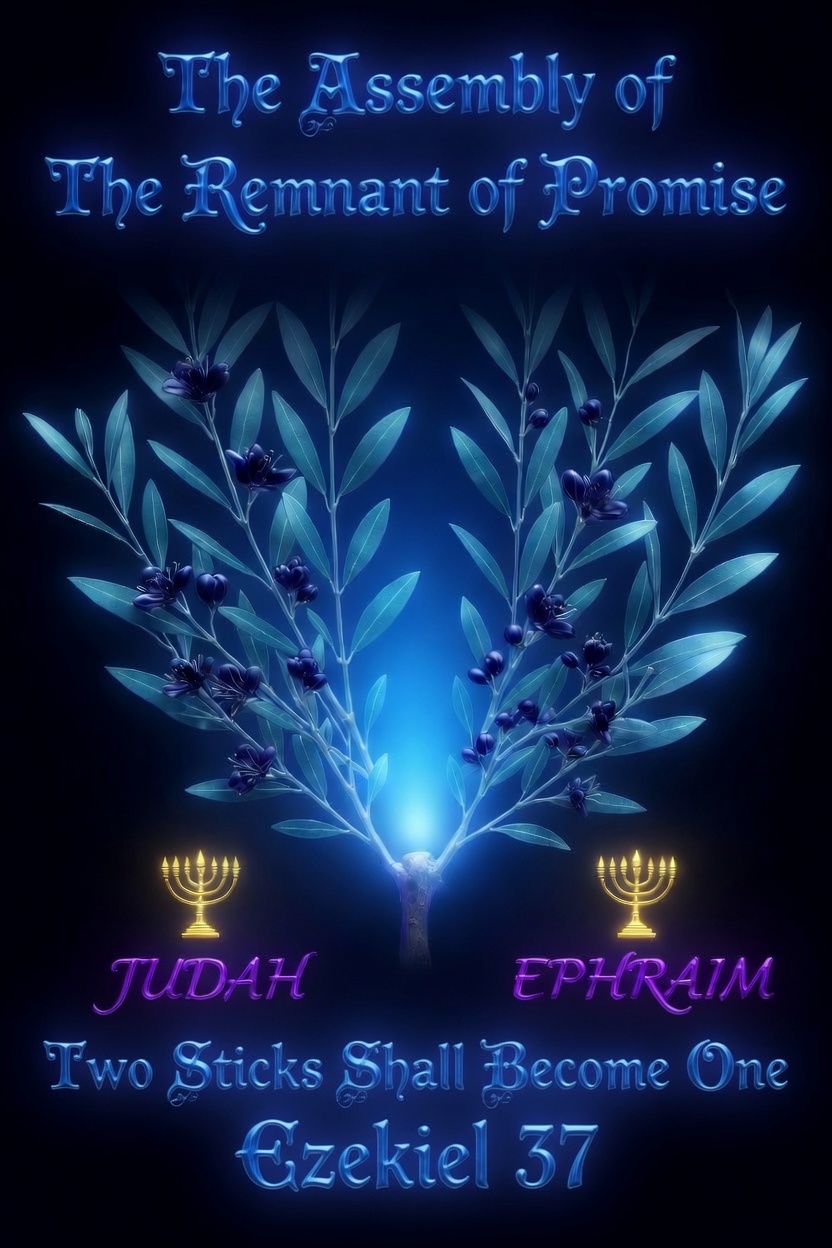
The lie is that there is only Yahudah (Judah) and the nations — only Yahudi (Jew) and Gentile, only the covenant people who kept their identity and everyone else. The ten northern tribes that Yahuah (God) scattered through the Assyrian captivity in 722 BC — the House of Yashar’el (Israel), the House of Ephraim, the House of Yosef — are treated as gone, absorbed, irrelevant, or quietly spiritualized into something else. The prophets who named those tribes, traced their scattering, and promised their restoration with precise specificity (Isaiah 11, Jeremiah 31, Ezekiel 37, Hosea 1–2, Zechariah 10) are quietly overruled.
Each system wears the lie differently. Christianity says the body of believers replaced Yashar’el (Israel). Judaism says only Yahudah (Judah) carries the covenant. Hebrew Roots / Messianic often says anyone who Torah-keeps is Yashar’el (Israel). Islam says the covenant transferred to Ishmael. All four deny the same thing: the gathering of the paternal blood remnant of all twelve tribes that Yahuah (God) himself promised.
We call this the antichrist — not a single future figure on a throne, but the system in every one of them that calls Yahuah (God) a liar by denying what he promised. The people inside the systems are victims. The systems are the enemy.
The Yahudi-(Jew)-and-Gentile binary is a two-category framework: Yahudah (Judah), and everyone else. Two boxes. The covenant people, and the nations. It is the framework all four religious systems share, and it is the framework the foundational lie requires.
The three-category framework the prophets actually taught is:
Yahudah (Judah). The southern house, the tribes of Yahudah (Judah) plus portions of Levi and Benjamin, the Yahudim (Jews) of the modern world. They retained their identity through exile.
The scattered seed of Yashar’el (Israel). The ten northern tribes. Divorced for idolatry (Jeremiah 3:8). Scattered through the Assyrian captivity. Dispersed among the nations until they became indistinguishable from the nations (Hosea 1:9). They lost their language, their Torah, their identity. They are a specific people with a paternal blood heritage — not a spiritual category, not a metaphor, not a self-selected group.
The nations. Those who are not of the paternal blood seed of Yashar’el (Israel) at all. They are not the seed and never become the seed. They are not in the covenant household. They are not a branch of the olive tree of Romans 11. The good news of the kingdom is the news of the gathering, and we proclaim it broadly because we cannot pick the citizens out by sight. His sheep hear his voice; those who reject, we shake the dust off our feet and we do not cast our pearls before swine. The nations’ place in the millennial reign is to receive priestly instruction from the gathered remnant. That is when any relationship between the seed and the nations begins. Not now. The distinction is real and permanent and the prophets maintain it through the restoration.
The “Gentiles” Paul wrote his letters to are very often Category 2, not Category 3. The “uncircumcision” of his mission was the scattered seed living as Gentiles among the nations. He quotes Hosea 1:10 in Romans 9:25–26 directly. He knew who he was writing to.
The scattered seed of Yashar’el (Israel) is the ten northern tribes — the House of Ephraim, the House of Yosef, called the House of Yashar’el (Israel) when distinguished from the southern House of Yahudah (Judah). When the kingdom split after Solomon, the northern house went into idolatry, and Yahuah (God) divorced it (Jeremiah 3:8), scattered it through the Assyrian captivity in 722 BC, and dispersed the people among the nations until they forgot their Torah, their language, and who they were. “Lo-Ammi” — not my people (Hosea 1:9). The same chapter promised reversal: “In the place where it was said unto them, Ye are not my people, there it shall be said unto them, Ye are the sons of the living El” (Hosea 1:10).
Could that be you? It might be. The cause-and-effect runs in a direction the inherited gospel does not name. The system says, if you hear and confess, you become a child of Yahuah (God). The Word says the reverse: if you are a child of Yahuah (God), you will hear when he calls. Yahusha (Jesus) said it directly: “My sheep hear my voice, and I know them, and they follow me” (John 10:27). Hearing reveals what was already true. It does not create what was not.
The awakening happening across the world right now — the men and women drawn back to the Sabbath, the feasts, the Torah, the covenant identity their grandmothers’ grandmothers lost somewhere in exile — is the prophetic gathering. If you are reading this and the Word feels familiar in your bones, that is not coincidence. We do not declare anyone’s lineage. We point to the One who gathers, and we let him do the gathering.
We keep them because Yahuah (God) called them his — “the feasts of Yahuah (God), which ye shall proclaim to be holy convocations, even these are my feasts” (Leviticus 23:2) — and because the prophets show us his people keeping them in the millennial reign (Isaiah 66:23, Zechariah 14:16–19, Ezekiel 45–46). What he hallowed in the beginning, he never unhallowed. The horn of Daniel 7:25 thought to change times and laws. He did not.
But this is not a how-to entry on a website. The question of how anyone walks out the appointed times is between them and the Father. We teach that the Sabbath is the Sabbath, that the feasts are the feasts, that Yahusha (Jesus) himself kept them (Luke 4:16, John 7:1–10, Luke 22:14–20), and that the Ruach HaKodesh (Holy Spirit) who lives in the believer is the same Ruach HaKodesh (Holy Spirit) who gave them at Sinai. That is what we teach. What you do with that is between you and Yahuah (God). Once the inherited filter is set down — the filter that says these were abolished, replaced, made obsolete — the Word will guide you. He always does.
Same answer in different clothing. Leviticus 11 and Deuteronomy 14 distinguish between what is clean and what is unclean, and Yahuah (God) called the distinction holy. “For I am Yahuah (God) that bringeth you up out of the land of Egypt, to be your Elohim (God): ye shall therefore be holy, for I am holy” (Leviticus 11:45). What the Father called holy is still holy.
Acts 10 is not a passage about food — Peter himself names the meaning in verse 28: “Yahuah (God) hath shewed me that I should not call any man common or unclean.” The vision was about the people, not the menu.
The Mark 7 passage that the inherited tradition reads as Yahusha (Jesus) declaring all foods clean is reading something into the text that the text does not say. The conflict in Mark 7 was about ritual hand-washing — a tradition added on top of the Torah, not a Torah commandment — and Yahusha (Jesus) was rebuking the tradition, not the Torah’s distinction between clean and unclean.
What you do with that is between you and the Father. The Word read plainly will guide.
Because the early body of believers read them. Because the New Testament writers quote them — Jude quotes Enoch directly (Jude 14–15) and treats it as authoritative. Because they were in the Septuagint that Paul and the apostles used. Because they fill in gaps about the watchers, the giants, the calendar, the priesthood, and the testaments of the patriarchs that the canonized sixty-six books leave compressed.
We are not adding scripture. We are reading what was always read until the Reformation removed it from the standard Protestant canon for reasons that had more to do with sixteenth-century politics than with apostolic practice. The Catholic and Orthodox traditions never removed the Apocrypha. The Ethiopian Orthodox canon includes Enoch and Jubilees to this day.
We test these books by the same standard we test everything: do they cohere with Torah and the prophets? Do they pass the 1234 of Truth? Do they amplify what is canonized or contradict it? Where they cohere, we read them. Where they contradict, we set them aside. The Word judges everything, including the extra-canonical witnesses. We do not put them above the canonized sixty-six. We read them alongside, as the early body did. We have published restored-name editions of The Apocrypha, The Book of Jasher, The Book of Enoch, and The Book of Jubilees for those who want to read them with the names restored.
Both. The doctrine of the Trinity, formalized in the fourth century at Nicaea and Constantinople, constructs three co-equal persons in a single Godhead. That is Greek philosophical architecture applied to Hebrew revelation. The Father is not a person co-equal to the Son. The Father is the formless infinite source. They are not three of the same kind of thing.
But denying the Trinity by collapsing the Father and the Son into one undifferentiated being — modalism, oneness theology, “Yahusha (Jesus) is the Father” — also misses what scripture actually shows. Yahusha (Jesus) prays to the Father. The Father sends the Son. The Father gives the Son authority. The relationship between the Formless and the Formed is real, eternal, and distinct.
What scripture shows is the Formless and the Formed. The Formless is the Father — the infinite source from which all things proceed. The Formed is the Word — drawn from within the Formless to do the will of the Formless, the one who spoke creation into being, who appeared to Abraham, wrestled with Jacob, spoke from the fire, led Yashar’el (Israel) through the wilderness, and came in the flesh as Yahusha (Jesus). The God of the Old Testament narratives is the Formed one — the Word — who became flesh. The Father, the Formless, is above and behind all of it.
Yahusha (Jesus) is Elohim (God). He has a Father. Both statements are true at once. He is in the Father and the Father is in him because he was drawn from the Father and remains a part of the Father. He is not the Father, but he is of the Father. The Trinity construction misses this. Trinity denial misses this. The Word shows it plainly when read without either filter.
The pre-tribulation rapture is a nineteenth-century invention with no patristic witness — no early body of believers, no early teacher, no creedal statement before John Nelson Darby in the 1830s, taught it. The plain reading of scripture is that the gathering of the faithful happens at the return of Yahusha (Jesus) the Messiah (Christ), at the end of the great tribulation, not before it. Matthew 24:29–31 places the gathering after the tribulation. The remnant endures.
We have written on this at length. Two of our books — What the Bible Really Says About the Rapture and Rapture Deception Exposed! — handle the question in full.
The millennial reign is the Messiah’s (Christ’s) reign on the earth — the appointed reign — with the refined remnant ruling with him as a kingdom of priests. Torah goes forth from Tsion (Zion). The appointed feasts are kept (Zechariah 14:16–19). The appointed times are kept (Isaiah 66:23). Sacrifices continue in the millennial temple as the prophets describe (Ezekiel 40–48, Isaiah 56:7, Jeremiah 33:17–22). The other nations come up to learn the Torah from the gathered seed. This is not metaphor. The prophets are explicit.
We read Revelation cyclically rather than as a strictly linear timeline. The same end-arc is told from several angles, each chapter showing the same close from a fresh face. There is one judgment of the souls of the dead — the seal of Revelation 11:18 and the great white throne of Revelation 20 are not two reckonings, but the same reckoning shown twice.
Start with the Word, read plainly. Set down the inherited filter — the filter that tells you certain commandments were abolished, certain feasts replaced, certain food categories made obsolete, certain books removed for good reason — and read the text without the filter for a season. The Father will speak. He always does to those who listen.
If you would like a guide through what we teach, the books in this series are organized to walk an awakening reader through the framework piece by piece. Ephraim Rising is the spine. Did God Really Say? names the serpent’s question in the pulpit. Not My People opens up Hosea. Babylon’s Galatian Deception dismantles the misuse of Paul. The Faith in Jesus That Saves and Decoding Salvation lay out justification correctly. The blog and this FAQ amplify and condense.
But the books are second. The Word is first. The reading is yours to do. We are companions, not gatekeepers. The Father gathers his own.
Carefully, patiently, and with the same posture Yahuah (God) has shown to you. They were handed what they believe. So were you, until something opened. They are not the enemy. They are the same lost sheep you were. Jeremiah 16:19 applies to all of us — “Surely our fathers have inherited lies” — and the us includes everyone you love.
Lead with the walk, not the lecture. The awakening believer’s walk — joyful, grounded, generous, non-defensive — is the most powerful argument. Let it speak. Do not open every conversation with the framework. Open with the love. The questions will come.
When they come, answer plainly and from the Word. Do not hammer. Do not claim insider knowledge. Do not position yourself as the one who got it right. “Walk worthy of the vocation wherewith ye are called, with all lowliness and meekness, with longsuffering, forbearing one another in love” (Ephesians 4:1–2). If a conversation gets heated, set it down. The Ruach HaKodesh (Holy Spirit) is not in a hurry. He worked on you for years. He will work on them at his own pace.
We are working on a course called How to Talk to Family that goes deeper. It will be available on this site when it is ready. In the meantime: love them. Pray for them. Walk the walk where they can see you. Trust the Father to do the work that only he can do.
Test it against the Word. Not against another teacher. Not against another tradition. Not against what feels comfortable. Against the Word itself, read in the order Yahuah (God) gave it — Torah and the prophets first, then the writings, then the New Testament read in light of what came before it.
Apply the 1234 of Truth — 1 John 2:3–4 — to every interpretation. “Hereby do we know that we know him, if we keep his commandments. He that saith, I know him, and keepeth not his commandments, is a liar, and the truth is not in him.” Any reading of any scripture that requires that verse to be false is a wrong reading. Yahuah (God) does not lie. The Word judges every system that claims to interpret it, including ours.
Test for the cumulative pattern. A single isolated verse pulled out of context can be made to say almost anything. The cumulative testimony of Torah, prophets, and apostles speaks in one voice. Where a system requires a single verse to overturn the cumulative pattern, the system is wrong, not the pattern.
And ask. “If any of you lack wisdom, let him ask of Yahuah (God), that giveth to all men liberally, and upbraideth not; and it shall be given him” (James 1:5). The Ruach HaKodesh (Holy Spirit) is not silent. He will lead a humble heart. He always has.
First batch — 22 questions and answers. Yoshi reviews, edits, approves or rewrites. Subsequent batches will deepen and widen the coverage as the site grows.