The short form below is what every reader sees first. Each section opens to a longer treatment with one tap. From there, a deeper dive button on any section opens into the apologetic, the blog, and the invitation home.

I. Posture and Purpose

O Yahuah (God), my strength, and my fortress, and my refuge in the day of affliction, the Gentiles shall come unto thee from the ends of the earth, and shall say, Surely our fathers have inherited lies, vanity, and things wherein there is no profit.Jeremiah 16:19

This document is a confession before it is a creed.

The first sentence the awakening reader speaks to Yahuah (God) is the one in the verse — surely our fathers have inherited lies — and our is the word that does the work. Not theirs. Ours. We were raised inside the inheritance. We are awakening inside it. The Ruach HaKodesh (Holy Spirit) is opening eyes one verse at a time, and what is on the page now reads differently than it read before. The same Word. The filter changed.

We dismantle the inherited systems of false teaching; we love the people who were handed them. The grandmother who hung the cross loved the Father; the system that handed her the cross is what this document dismantles. Read this with the Word open. Prove all things; hold fast that which is good (1 Thessalonians 5:21).

A deeper dive into this sectionClose this dive

It is not a creed to sign. It is not a denominational membership card. It is not a list of who is in and who is out. We do not declare any reader’s lineage. Yahuah (God) gathers his own; the assembly does not appoint itself the gatekeeper at his door.

Christianity, Judaism, Hebrew Roots, and Islam each carry inherited lies, and each holds people we love. The lies came from somewhere. The people inside any of those four systems are the heirs of someone else’s wrong answers, not the architects of the deception. They are family in a different room. The verse applies to them. The verse applies to us.

This is a David and Goliath ministry. We are small. The system we name is centuries deep and billions wide, fortified by inherited theology and animated by spirits whose names we know. We are not impressed by the size of it. We have a stone, a sling, and a Father who has already declared the outcome.

The lie we are dismantling is not a fleshly conspiracy. It does not need rooms full of men plotting in cahoots to keep the sheep deceived. We wrestle not against flesh and blood, but against principalities, against powers, against the rulers of the darkness of this world, against spiritual wickedness in high places (Ephesians 6:12). Person A and person B are not coordinating against the truth — each is doing what the spirits he has allowed into himself are doing through him. The systems run on borrowed darkness, and the borrowing is the sickness.

The spirits are in control of the systems. Yahuah (God) is in control of the spirits. He could end the deception with one word and chose not to. He is using it — for his own purposes and for his own good pleasure — to gather his sheep and to refine those gathered. The lie has its run because he is using it. The hour of its undoing is the hour he has already appointed. Until then, what the Father is doing under it is wider than we can see.

So our purpose is twofold. As watchmen and as shepherds, we set out to expose the inherited lies, the principalities behind them, and the systems they animate — and to give the reader the tools and resources to guide him to a better path. He that taketh warning shall deliver his soul. But if the watchman… blow not the trumpet, and the people be not warned… his blood will I require at the watchman’s hand (Ezekiel 33:5–6). We blow the trumpet so that we deliver our souls, and so that the reader who hears may deliver his.

And as holy men of Yahuah (God), we stand also as the judgment-day witnesses against any reader who hears and chooses not to follow. This is not vindictiveness. We do not speak against you in this life; our prayers are for you, that you would hear and live. But scripture shall be fulfilled — they are without excuse (Romans 1:20). When the most High shall appear upon the seat of judgement… and wicked deeds shall bear no rule (2 Esdras 7:33, 35), and Behold, He cometh with ten thousands of His holy ones, to execute judgement upon all, and to convict all flesh of all the works of their ungodliness (1 Enoch 1:9; cf. Jude 14–15) — what we have written in this document and what is spoken from this assembly will stand as testimony that the trumpet was blown. Our prayers are for you while it is yet day. Our witness is for the day when day ends.

Read this with the Word open. Test every claim. Prove all things; hold fast that which is good (1 Thessalonians 5:21). The Ruach HaKodesh (Holy Spirit) is not in a hurry, and neither are we.

A deeper dive — the apologetic


II. Grace, the Blood, the Cross

For by grace are ye saved through faith; and that not of yourselves: it is the gift of Elohim (God): not of works, lest any man should boast.Ephesians 2:8–9

We confess that salvation is the gift of Elohim (God), given by grace through faith in Yahusha (Jesus), the Messiah (Christ) of Yashar’el (Israel).

We did not earn it. We did not negotiate for it. We did not raise our hand at the right moment, walk an aisle, or polish ourselves into a condition the Father could finally accept. But Elohim (God) commendeth his love toward us, in that, while we were yet sinners, Messiah (Christ) died for us (Romans 5:8). The gospel arrives where we are, and what it carries is the price already paid.

The price was the blood. Ye were not redeemed with corruptible things, as silver and gold… but with the precious blood of Messiah (Christ), as of a lamb without blemish and without spot (1 Peter 1:18–19). His people — purchased with his own blood (Acts 20:28). A purchase. A people made his by transaction, paid for in the blood of the Lamb. Without shedding of blood is no remission (Hebrews 9:22). What the priests of old foreshadowed, Yahusha (Jesus) finished in his body. The eternal redemption is real. It is bought.

And the cross opened the door home. The scattered seed of Yashar’el (Israel) had walked into the curse by walking contrary to Yahuah (God) — divorced for breaking the covenant, exiled, dispersed, lost in the lands of the nations. Yahusha (Jesus) bore that curse on the tree to open the way back through it. Messiah (Christ) hath redeemed us from the curse of the law, being made a curse for us: for it is written, Cursed is every one that hangeth on a tree (Galatians 3:13). The curse named there is the exile-judgment of Deuteronomy 28 — not the Torah itself. The door home was nailed open in the body of the Lamb.

So we hold the gift exactly as scripture gives it — free, full, sufficient, gracious, undeserved. We do not let any flesh-credential gospel set itself up as the doorway through which the gift must first pass. And we hold one more line, because grace and the homecoming are one motion: the same grace that brought us in is bringing us home. The cross was a door, not a cancellation. The Father who paid the price is the Father whose ways the price was paid to bring us back to.

A deeper dive into this sectionClose this dive

The blood was necessary. Without shedding of blood is no remission (Hebrews 9:22). The animals of the older covenant could not finish the work; they pointed to it. Neither by the blood of goats and calves, but by his own blood he entered in once into the holy place, having obtained eternal redemption for us (Hebrews 9:12). What the priests of old foreshadowed, Yahusha (Jesus) finished in his body. The eternal redemption is real. It is bought.

And the cross opened the door home. The scattered seed of Yashar’el (Israel) had walked into the curse by walking contrary to Yahuah (God) — divorced for breaking the covenant, exiled, dispersed, lost in the lands of the nations until they forgot whose they were. The curse of Deuteronomy 28 fell, as Yahuah (God) said it would. And Yahusha (Jesus) bore that curse on the tree to open the way back through it. Messiah (Christ) hath redeemed us from the curse of the law, being made a curse for us: for it is written, Cursed is every one that hangeth on a tree (Galatians 3:13). The curse named there is the exile-judgment of Deuteronomy 28 — not the Torah itself. Yahusha (Jesus) bore the wages the scattered had earned, and the way home was opened. The door is the gospel. The door home was nailed open in the body of the Lamb.

So we hold the gift exactly as scripture gives it — free, full, sufficient, gracious, undeserved. We do not add a credential to it. We do not let any flesh-credential gospel set itself up as the doorway through which the gift must first pass. Faith is the hand that receives. Grace is the open hand of Elohim (God). We were sinners, and the price was paid for us while we were sinners.

And we hold one more line, because grace and the homecoming are one motion. The same grace that brought us in is bringing us home. The cross was a door, not a cancellation. The Father who loved us enough to pay the price is the Father whose ways the price was paid to bring us back to. The shape of the gift is the shape of a homecoming, and the home has a Father, and the Father has a house, and the house has a way of life that is for our good always (Deuteronomy 6:24). We will say more about the way home in the sections that follow. Here we say only what scripture says first: by his blood we are made his.

A deeper dive — the apologetic


III. The Promise Kept

I will take you from among the heathen, and gather you out of all countries, and will bring you into your own land.Ezekiel 36:24

The gospel did not begin in the New Testament. It began with a promise the Father swore to Abraham, confirmed to Isaac, settled on Jacob, named over the twelve tribes that came from him, carried through every page of the prophets — and Yahusha (Jesus) came to fulfill it. I am not sent but unto the lost sheep of the house of Yashar’el (Israel) (Matthew 15:24). The cross is not a swerve in the story. The cross is the keeping of the oath.

The promise is kept for his name’s sake (Ezekiel 36:22) — not because the scattered cleaned themselves up enough to be remembered, but because Yahuah (God) said he would gather them, and his name is on the line. And what he promised was a gathering. The covenant people are a paternal blood seed Yahuah (God) named, traced, scattered, and is bringing home.

Scripture’s framework is three: the house of Yahudah (Judah) — the Yahudim (Jews) who retained their covenant identity through every exile; the scattered seed of Yashar’el (Israel) — the ten northern tribes divorced for breaking the covenant, dispersed until Hosea’s Lo-Ammi came to rest on them, with the very same prophet’s promise that in the place where it was said unto them, Ye are not my people, there it shall be said unto them, Ye are the sons of the living Elohim (God) (Hosea 1:10); and the nations — those not of the paternal blood seed — who walk alongside the covenant household as Torah stranger and sojourner, welcomed, loved, sustained. The framework is laid out at depth in the deeper layers of this document. The gospel only names it here, because the framework is what the promise is.

The seed the prophets named is being gathered. The lie has had its run. The promise is being kept. We are watching it happen.

A deeper dive into this sectionClose this dive
Thus saith the Lord Yahuah (God); I do not this for your sakes, O house of Yashar’el (Israel), but for mine holy name’s sake, which ye have profaned among the heathen, whither ye went… For I will take you from among the heathen, and gather you out of all countries, and will bring you into your own land.Ezekiel 36:22, 24

The gospel did not begin in the New Testament. It began with a promise the Father swore to Abraham, confirmed to Isaac, settled on Jacob, named over the twelve tribes that came from him, and carried through every page of the prophets — and Yahusha (Jesus) came to fulfill it. I am not sent but unto the lost sheep of the house of Yashar’el (Israel) (Matthew 15:24). The cross is not a swerve in the story. The cross is the keeping of the oath.

The promise is kept for his name’s sake. Yahuah (God) himself states the reason in Ezekiel 36 — not for our righteousness, not for any merit we accumulated in exile, not because the scattered cleaned themselves up enough to be remembered. He gathers because he said he would, and his name is on the line. The gospel is not us reaching for him. It is him keeping his word to himself about us.

And what he promised was a gathering. I will take you from among the heathen, and gather you out of all countries, and will bring you into your own land (Ezekiel 36:24; cf. Ezekiel 20:34–38). The covenant people are a paternal blood seed Yahuah (God) named, traced, and scattered, and the gathering is of that seed, from where it was scattered — not a different people, not a substitute people, but the same people the prophets named, brought home from the lands of their dispersion. Most of them living as something else. Most of them having forgotten whose they were.

The framework scripture maintains is three. The house of Yahudah (Judah) — the Yahudim (Jews) who retained their covenant identity through every exile and are identifiable as a people to this day. The scattered seed of Yashar’el (Israel) — the ten northern tribes divorced for breaking the covenant, dispersed through the Assyrian captivity, lost in the lands of the nations until Hosea’s Lo-Ammi came to rest on them: ye are not my people — with the very same prophet’s promise that in the place where it was said unto them, Ye are not my people, there it shall be said unto them, Ye are the sons of the living Elohim (God) (Hosea 1:9–10; cf. Hosea 2:23; Romans 9:25–26). And the nations — those not of the paternal blood seed — who walk alongside the covenant household as Torah stranger and sojourner: welcomed, loved, sustained, never the seed of promise but never excluded from the household where the seed lives. The framework is laid out at fuller depth in the deeper layers of this document; here the gospel only names it, because the framework is what the promise is.

The Lo-Ammi over the scattered has been in place since the fourth century. The pulpits that rose then declared themselves the new Yashar’el (Israel) and pronounced over Yahuah (God)’s sheep — his sheep who hear his voice — that they were not his people. The seed the prophets named was declared retired. A substitute was installed in its place. It was a counterfeit verdict, repeated for seventeen centuries with conviction, and it changed nothing about what Yahuah (God) actually said. The Father’s Lo-Ammi in Hosea was for a season, with the very same prophet’s promise that the season would end and his people would be called sons of the living Elohim (God) again. The pulpit’s verdict is not the Father’s. The seed the prophets named is being gathered out of every nation where it was scattered. The lie has had its run. The promise is being kept. We are watching it happen.

A deeper dive — the apologetic


IV. The Sifting Between

Not every one that saith unto me, Lord, Lord, shall enter into the kingdom of heaven; but he that doeth the will of my Father which is in heaven… and then will I profess unto them, I never knew you: depart from me, ye that work iniquity.Matthew 7:21–23

The gospel includes a warning. The inherited pulpit cut it out and called what was left the gospel. We will not repeat the cut. The doorway carries what scripture carries — the gift, and the warning that scripture also gives.

The first sorting is the harvest. Wheat and tares grew together; at the harvest, the angels separate them and burn the tares (Matthew 13:30, 49–50). The tares are not gathered. They were never the seed Yahuah (God) promised.

But the wheat passes through a second sorting. After the gathering of the scattered out of all nations comes a wilderness sifting. I will cause you to pass under the rod… and I will purge out from among you the rebels, and them that transgress against me (Ezekiel 20:37–38). Chaff is winnowed from kernel. Goats are separated from sheep (Matthew 25:31–46). The wedding garment is asked for, and the man without it is bound and cast out (Matthew 22:11–13). This second sifting is not done on the tares. It is done on the gathered.

Names can be blotted out only after they have been written (Exodus 32:33; Revelation 3:5; 13:8). Depart from me, ye that work iniquity — Yahusha (Jesus) speaks that sentence to those who called him Lord, who prophesied in his name. He does not speak it to the tares. He speaks it to wheat that did not bear fruit.

We carry the warning because we love the reader enough to repeat what scripture said. The Shepherd is jealous for his sheep. The gift is real. The blood is real. The blotting out is real, too. All of it from the same heart. All of it from the same Father.

A deeper dive into this sectionClose this dive
Not every one that saith unto me, Lord, Lord, shall enter into the kingdom of heaven; but he that doeth the will of my Father which is in heaven… Many will say to me in that day, Lord, Lord… and then will I profess unto them, I never knew you: depart from me, ye that work iniquity.Matthew 7:21–23

The gospel includes a warning. The inherited pulpits cut it out and called what was left the gospel. We will not repeat the cut. The doorway document carries what scripture carries: the gift, and the warning that scripture also gives.

The first sorting is the harvest. Wheat and tares grew together in the same field; at the harvest, the angels separate them and burn the tares in the fire (Matthew 13:30, 49–50). The tares are not gathered — they were never the seed Yahuah (God) promised. They were sown by the enemy among the wheat, and the harvest is the day they are removed.

But the wheat passes through a second sorting. After the gathering of the scattered out of all nations comes a wilderness sifting. I will cause you to pass under the rod… and I will purge out from among you the rebels, and them that transgress against me (Ezekiel 20:37–38). Chaff is winnowed from kernel — he will burn up the chaff with unquenchable fire (Luke 3:17). Goats are separated from sheep (Matthew 25:31–46). The wedding garment is asked for, and the man without it is bound and cast out — and he was speechless (Matthew 22:11–13). This second sifting is not done on the tares. It is done on the gathered.

Names can be blotted out only after they have been written. Whosoever hath sinned against me, him will I blot out of my book (Exodus 32:33; cf. Psalm 69:28). The promise to the overcomer — I will not blot out his name out of the book of life (Revelation 3:5) — means something only because the alternative is real. The names in the Lamb’s book of life were written from the foundation of the world (Revelation 13:8), and the warning is to the names that are in. Depart from me, ye that work iniquity — Yahusha (Jesus) speaks that sentence to those who called him Lord, who prophesied in his name, who did wonders in his name. He does not speak it to the tares. He speaks it to the wheat that did not bear fruit.

This is the line the inherited pulpit could not preach. The pulpit needed grace to be a closed transaction, the cross to have settled every account permanently, the prayer to be the lock and the key. Scripture refused. The warning belongs in the gospel because it is in the gospel — Yahusha (Jesus) put it there, the prophets put it there, the apostles put it there, and the Father has not removed it.

We carry the warning because we love the reader enough to repeat what scripture said. The Shepherd is not a threat to his sheep. He is jealous for them. The gift is real. The blood is real. The blotting out is real, too. All of it from the same heart. All of it from the same Father. The doorway document carries both because the gospel does.

A deeper dive — the apologetic


V. The New Heart

I will put my spirit within you, and cause you to walk in my statutes, and ye shall keep my judgments, and do them.Ezekiel 36:27

The new covenant is Torah written on the heart. I will put my law in their inward parts, and write it in their hearts; and will be their Elohim (God), and they shall be my people (Jeremiah 31:33). Not Torah replaced. Not Torah abolished. The same Torah, written by the Ruach HaKodesh (Holy Spirit) into a heart that did not have it before, in a people who could not keep it before.

The Spirit who lives in the believer is the same Spirit who spoke at Sinai. He does not lead in two directions. A new heart also will I give you, and a new spirit will I put within you: and I will take away the stony heart out of your flesh, and I will give you an heart of flesh (Ezekiel 36:26). The Spirit causes the walking in statutes. The new heart and Torah-keeping are not in tension. They are one motion of one love.

The new heart will not let us boast. Then shall ye remember your own evil ways… and shall loathe yourselves in your own sight for your iniquities and for your abominations (Ezekiel 36:31). The new heart loves the Way and loathes what we did before we walked in it. Both at once. From the same heart. I delight in the law of Yahuah (God) after the inward man (Romans 7:22). The delight is the new heart’s native voice. We did not produce it. We could not produce it. The Father gives it to those he gathers.

A deeper dive into this sectionClose this dive
Behold, the days come, saith Yahuah (God), that I will make a new covenant with the house of Yashar’el (Israel), and with the house of Yahudah (Judah)… I will put my law in their inward parts, and write it in their hearts; and will be their Elohim (God), and they shall be my people.Jeremiah 31:31, 33

The new covenant is Torah written on the heart. Not Torah replaced. Not Torah abolished. Not Torah reinterpreted into something the prophets would not recognize. The pulpit cut the word law out of the new covenant; the verse will not let it stay cut. The new covenant is the same Torah, written by the Ruach HaKodesh (Holy Spirit) into a heart that did not have it before, in a people who could not keep it before.

The Spirit who lives in the believer is the same Spirit who spoke at Sinai. He does not lead in two directions. A new heart also will I give you, and a new spirit will I put within you: and I will take away the stony heart out of your flesh, and I will give you an heart of flesh. And I will put my spirit within you, and cause you to walk in my statutes, and ye shall keep my judgments, and do them (Ezekiel 36:26–27). The Spirit causes the walking in statutes. The new heart and Torah-keeping are not in tension. They are one motion of one love.

The new heart is gift, equipping, and remembered remorse all at once. Then shall ye remember your own evil ways, and your doings that were not good, and shall loathe yourselves in your own sight for your iniquities and for your abominations (Ezekiel 36:31; cf. Ezekiel 20:43). The new heart will not let us boast. It remembers the rebellion. It remembers the years we walked contrary, the lies we believed, the things we did under their cover. The remembering is the salt the gospel keeps in the saved. The new heart loves the Way and loathes what we did before we walked in it. Both at once. From the same heart.

This is the equipping for a kingdom that runs on Torah-life. I delight in the law of Yahuah (God) after the inward man (Romans 7:22). The delight is the new heart’s native voice. We did not produce it. We could not produce it. The Father gives it to those he gathers. I will be merciful to their unrighteousness, and their sins and their iniquities will I remember no more (Hebrews 8:12) — and the same passage says I will put my laws into their mind, and write them in their hearts (Hebrews 8:10; cf. Hebrews 10:16). Sins forgotten by the Father, Torah remembered in the heart. That is the new covenant scripture promised.

The new heart is the equipment for the kingdom we are coming home to. It is a heart that loves the Sabbath, loves the feasts, loves the commandments, loves the Father’s instruction the way David loved it — not because it has been told to, but because it cannot help it. The stony heart is gone. The heart of flesh is what is left.

A deeper dive — the apologetic


VI. The Sign of the Covenant

Verily my sabbaths ye shall keep: for it is a sign between me and you throughout your generations.Exodus 31:13

The Sabbath is the sign of the covenant. Yahuah (God) hallowed the seventh day in the beginning, set it apart from the other six, rested on it himself, and sanctified it as the marker between him and his people forever (Genesis 2:1–3). It was hallowed before there was a tabernacle, before there was a Torah at Sinai, before there was a tribe of Yahudah (Judah). It was the Father’s first sanctification, and it has not been unsanctified.

The horn of Daniel 7:25 thought to change times and laws. He thought. He did not. Institutional Christianity’s Sunday is not the Sabbath — it is the day the horn moved. The seventh day remains the seventh day. The Father’s hallowing did not migrate when a Roman emperor put it on a different page.

In this age, the Sabbath functions as the engagement ring of the covenant. The bride wears it while the bridegroom is away. The ring is not the wedding; the wedding is the marriage supper of the Lamb (Revelation 19:7–9), still ahead. The ring is the visible promise that the one who gave it is coming back, and the one who wears it is his.

What the Father hallowed in the beginning he never unhallowed. From one sabbath to another, shall all flesh come to worship before me, saith Yahuah (God) (Isaiah 66:23). The day was made for man (Mark 2:27–28). It still is.

A deeper dive into this sectionClose this dive
Verily my sabbaths ye shall keep: for it is a sign between me and you throughout your generations; that ye may know that I am Yahuah (God) that doth sanctify you… It is a sign between me and the children of Yashar’el (Israel) for ever.Exodus 31:13, 17

The ring is the sign of the betrothal that holds in the meantime — the visible promise that the one who gave it is coming back, and the one who wears it is his. To strip the ring off is to deny the betrothal. To wear it is to keep the sign the bridegroom himself appointed.

And the Sabbath does not end at the consummation. What is for our good now will be for our good in the world to come.

A deeper dive — the apologetic


VII. The Commands

If ye love me, keep my commandments.John 14:15

That sentence fell from the Messiah’s (Christ’s) own lips. Love and keeping are one motion. Faith does not stand against Torah. Faith establishes Torah (Romans 3:31).

The verses the inherited theology weaponized are the same verses that, read together as Paul wrote them, refuse the weaponizing. Sin shall not have dominion over you: for ye are not under the law, but under grace (Romans 6:14). The very next breath: What then? shall we sin, because we are not under the law, but under grace? Elohim (God) forbid (Romans 6:15). Paul wrote those two as one sentence. The Reformation lifted the first half out and called what was left the gospel. Verse 15 is where the truncation breaks. We are not under the law as a system of justification — Yahusha (Jesus) paid that account in his blood. We are not free from the law as a way of love — I delight in the law of Yahuah (God) after the inward man (Romans 7:22), Paul says, in the very passages the inherited reading uses to abolish the law.

What we hold, plainly: faith brings us in. The blood is the price already paid; we receive it empty-handed, made his by what the Lamb did, not by what we did. And the same Father whose grace brought us in is the Father whose ways the price was paid to bring us back to. Love is the form the saved life takes. Love is the fulfilling of the law (Romans 13:10), and the commandments are how love walks. His commandments are not grievous (1 John 5:3). The new heart, being a new heart, knows that.

Faith brings us in. Love walks the way home.

A deeper dive into this sectionClose this dive
If ye love me, keep my commandments.John 14:15

That sentence fell from the Messiah’s (Christ’s) own lips. The pulpit that severed faith from the commandments is the pulpit that severed Yahusha (Jesus) from his own words. Love and keeping are one motion. Faith does not stand against Torah. Faith establishes Torah (Romans 3:31).

The verses the inherited theology weaponized are the same verses that, read together as Paul wrote them, refuse the weaponizing. Sin shall not have dominion over you: for ye are not under the law, but under grace. That is Romans 6:14. The very next breath: What then? shall we sin, because we are not under the law, but under grace? Elohim (God) forbid (Romans 6:15). Paul wrote those two as one sentence. The Reformation lifted the first half out and called what was left the gospel. Verse 15 is where the truncation breaks. We are not under the law as a system of justification — Yahusha (Jesus) paid that account in his blood. We are not free from the law as a way of love — I delight in the law of Yahuah (God) after the inward man (Romans 7:22), Paul says, in the very passages the inherited reading uses to abolish the law.

The 1234 of Truth is the test that exposes the lie at every angle. And hereby we do know that we know him, if we keep his commandments. He that saith, I know him, and keepeth not his commandments, is a liar, and the truth is not in him (1 John 2:3–4). Apply that to any reading of any scripture: if the reading requires that verse to be false, the reading is false. The Spirit who wrote 1 John 2:3 does not unwrite it three letters later in Romans. His commandments are not grievous (1 John 5:3). The new heart, being a new heart, knows that.

What we hold, plainly: faith brings us in. The blood is the price already paid; we receive it empty-handed, and we are made his by what the Lamb did, not by what we did. And the same Father whose grace brought us in is the Father whose ways the price was paid to bring us back to. Love is the form the saved life takes. Love and the commandments are not in tension — love is the fulfilling of the law (Romans 13:10), and the commandments are how love walks. We can lose what was freely given (the Father said it himself; the wedding garment was asked for). We will not lose it the way the inherited theology said it could not be lost. We will lose it, if we lose it, by refusing to love.

Faith brings us in. Love walks the way home.

A deeper dive — the apologetic


VIII. Come Home

Come, and let us return unto Yahuah (God): for he hath torn, and he will heal us; he hath smitten, and he will bind us up.Hosea 6:1

This is the doorway. Behind it, deeper layers — the diagnostic that names what was handed to us, the framework that walks the prophets’ promises through the apostles’ letters, the testing tools the Bereans used (Acts 17:11) so the reader can prove every claim against the Word. The deeper layers are linked at the bottom of this page. The Free Truth Principle holds: nothing essential is paywalled. Every layer goes deeper, not shallower.

The remnant has nothing to boast in. Eyes were opened by the Spirit, not by our cleverness. Names were written before creation, not by our walking aisles. The Father drew his sheep home; the sheep heard his voice; the gathering is the keeping of an oath he swore to Abraham, Isaac, and Jacob long before any of us were on the earth. There is nothing to glory in except grace.

So we end with what we never claim. We do not declare any reader’s lineage. We do not appoint ourselves the gatekeepers at the Father’s door. We do not hand the reader a calendar, a checklist, or a how-to. The Ruach HaKodesh (Holy Spirit) does what the Ruach HaKodesh (Holy Spirit) does, in his own time, by his own hand, in each life he is at work in.

What we ask is what scripture asks. Ho, every one that thirsteth, come ye to the waters (Isaiah 55:1) — the door is open, and the door is the Father, and the Father is keeping his promise. Come unto me, all ye that labour and are heavy laden, and I will give you rest (Matthew 11:28). The Shepherd is calling.

If you have read this far, you are not where you started. You may not yet know what you are. The Father knows.


Short form complete — eight sections drafted as a disciplined edit of the long form’s §I–§VII plus a doorway-shaped closing. Total prose body ≈ 2,200 words.

A deeper dive into this sectionClose this dive
And it shall come to pass in that day, that Yahuah (God) shall set his hand again the second time to recover the remnant of his people… and shall assemble the outcasts of Yashar’el (Israel), and gather together the dispersed of Yahudah (Judah) from the four corners of the earth.Isaiah 11:11–12

Every system that claims to carry the covenant — Christianity, Judaism, Hebrew Roots, and Islam — shares one foundational lie. Each calls Yahuah (God) a liar to his face by denying the same thing he promised: that he would gather the paternal blood remnant of all twelve tribes of Yashar’el (Israel) home.

The shape of the lie is a binary. Yahudah (Judah) and everyone else. The ten northern tribes — divorced, scattered through the Assyrian captivity, dispersed until they forgot whose they were — treated as gone, absorbed, retired from the covenant, or spiritualized into a category open to anyone who joins. Two slots remain in the architecture: the Yahudim (Jews) of Yahudah (Judah) on one side, the Gentiles on the other. Whatever the system calls itself, that two-slot arrangement is the lie’s actual shape.

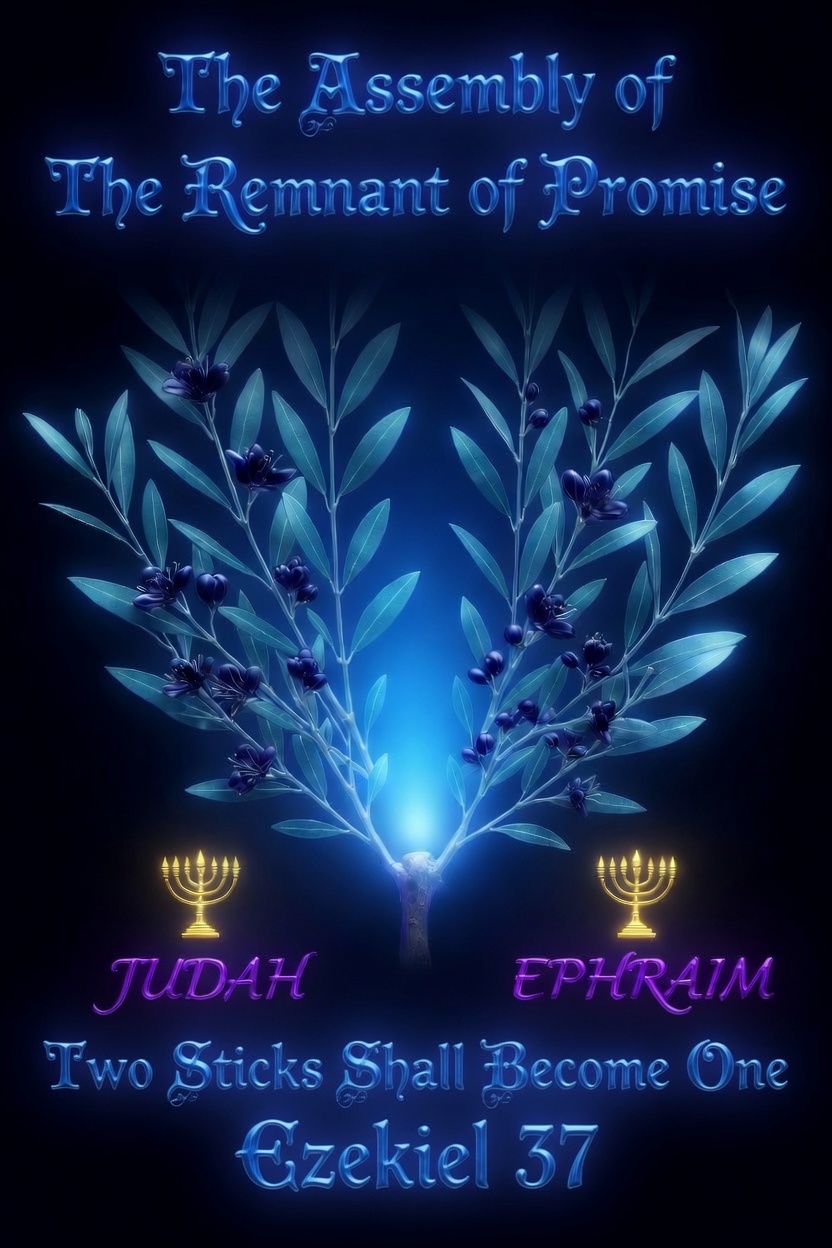
Scripture refuses it. Isaiah 11 names both the outcasts of Yashar’el (Israel) and the dispersed of Yahudah (Judah) — two distinct gatherings, the second time. Ezekiel takes two sticks and joins them in his hand: Behold, I will take the stick of Joseph, which is in the hand of Ephraim, and the tribes of Yashar’el (Israel) his fellows, and will put them with him, even with the stick of Yahudah (Judah), and make them one stick, and they shall be one in mine hand (Ezekiel 37:19). Jeremiah’s new covenant names them separately as well — with the house of Yashar’el (Israel), and with the house of Yahudah (Judah) (Jeremiah 31:31). The prophets do not flatten what Yahuah (God) distinguished. The systems do.

Yahuah (God) himself foreclosed the lie’s premise. I said, I would scatter them into corners, I would make the remembrance of them to cease from among men: were it not that I feared the wrath of the enemy (Deuteronomy 32:26–27). He could have erased them from human memory; he did not, because his name was on the line. He scattered them. He did not retire them. The four costumes say he did.

This is what scripture calls the antichrist. Not a future man on a throne. The system — in any system — that calls Yahuah (God) a liar by denying what he promised, that strips the gathering out of the gospel, that recasts the seed the prophets named as something else. The antichrist is what stands in the seat of Yahuah (God) and overrules him. Whichever system names that seat as its own, the foundational lie is enthroned there.

The people inside any of those systems are not the antichrist. They are victims of it. The grandmother who has prayed inside one of these systems for sixty years is not the system. Surely our fathers have inherited lies (Jeremiah 16:19) — the inheritance landed on her, and on us, in the same way. The systems are what we name. The people, we love. The hour Yahuah (God) appointed for the lie’s unraveling has come. The seed the prophets named is being gathered. The pulpits will say it cannot be. The Father is doing it anyway.

A deeper dive — the apologetic


Skip to toolbar