A Deeper Dive — Statement of Faith §VIII
The expanded apologetic for §VIII of the Statement of Faith — what most preachers teach on this subject, where the inherited reading falls short of scripture, and how the framework reads the same scripture faithfully.
The inherited Christian pulpit teaches that the gospel’s framework is two categories — Jew and Gentile — and that the antichrist is a future political figure who will arise at the end of the age. Both teachings cluster around a single architectural assumption: the prophetic gathering of the twelve tribes of Yashar’el (Israel) is either complete in the body of believers, transferred to a spiritual new Israel, or relegated to an end-times event involving only the southern house.
Around this center, four secondary teachings cluster:
The two categories of scripture are Jew and Gentile, with the gospel opening the Gentile category to all who believe. Wherever the New Testament uses the term Gentiles, the inherited pulpit reads it as referring to non-Yahudi (non-Jewish) people of any nation. The Pauline passages addressing the uncircumcision and the nations are folded into this category. The fact that Paul cites Hosea 1:10 (the gathering of the divorced northern house) in Romans 9:25–26 to describe his audience is read as Paul applying a historical Yahudi (Jewish) prophecy to a generic Gentile category, transferring the language across rather than recognizing that Paul’s Gentiles often are the scattered seed of the divorced house themselves.
The ten northern tribes are taught as lost. Some pulpits teach they are lost in the sense of absorbed into the nations and never to be recovered as a distinct group. Others teach they are lost in the sense of spiritually scattered, recoverable only through the gospel’s call to all peoples, without a specific paternal-blood gathering. The dispensational stream allows for some future restoration of the twelve tribes during the millennial reign but treats this as a separate program from the present-age gospel addressed to the church. In none of these streams is the present-tense gathering of the scattered seed of Yashar’el (Israel) recognized as the central work the Father is doing right now.
The antichrist is taught as a single end-times figure — the man of sin, a coming political ruler who will arise during a future tribulation, persecute saints, demand worship, and be defeated at the Messiah’s (Christ’s) bodily return. The inherited prophetic charts place this figure at a specific point on a linear timeline, often associated with a rebuilt third temple, a peace covenant with Israel for seven years, and various geopolitical specifics. The antichrist’s identity is reduced to one man at one moment.
The four costumes are treated as different religions, not as four costumes of the same lie. Christianity is treated as the true religion, with Judaism, Hebrew Roots, and Islam as variously incomplete or in error. The notion that all four share a single foundational lie — the denial of the twelve-tribe gathering — is foreign to the inherited reading because the inherited reading does not see the gathering as the gospel’s spine in the first place.
This is the gospel the awakening reader was handed about the structure of the framework and the identity of the antichrist. The gathering was retired or relocated; the antichrist was reduced to a single future figure; the systems’ shared architecture was hidden.
The reading does not fail because the verses about a future man of sin do not exist. They do (2 Thessalonians 2:3–4; Revelation 13). It fails because it stops at one future figure and does not see what John actually wrote about the antichrist as a spirit and a system operating across centuries.
John names the antichrist plurally and presently. Little children, it is the last time: and as ye have heard that antichrist shall come, even now are there many antichrists; whereby we know that it is the last time (1 John 2:18). The antichrist is not yet — and it is also already operative as many antichrists in John’s first-century present. And every spirit that confesseth not that Yahusha (Jesus) Messiah (Christ) is come in the flesh is not of Yahuah (God): and this is that spirit of antichrist, whereof ye have heard that it should come; and even now already is it in the world (1 John 4:3). Already is it in the world. The antichrist is a spirit operating now, in John’s day, and continuing across the ages, and will manifest in a final figure. The inherited reading kept the future figure and lost the present spirit.
The criterion John gives for identifying the antichrist spirit is doctrinal, not political. Who is a liar but he that denieth that Yahusha (Jesus) is the Messiah (Christ)? He is antichrist, that denieth the Father and the Son (1 John 2:22). The antichrist denies. He denies the relationship of the Father to the Son, the incarnation, and (by extension across the prophets and apostles) the covenant the Father has named, sworn, and is keeping. Wherever the Father’s covenant work is denied — by what people teach — the spirit of antichrist is operating.
Daniel 7:25 names the operation of the same spirit in covenant terms. And he shall speak great words against the most High, and shall wear out the saints of the most High, and think to change times and laws. The little horn of Daniel 7 stands in opposition to Yahuah (God), wears out his people, and thinks to change times and laws — the calendar, the Sabbath, the feasts, the dietary commandments, the sacred-name reverence, the very things the Father set. Institutional Christianity’s Sunday-Law shift in 321 AD, the Council of Laodicea’s anti-Sabbath canon in 363 AD, the renaming of the appointed feasts, the burying of the sacred name under the LORD — these are the historical fingerprints of the horn doing exactly what Daniel 7:25 named. The inherited pulpit reads Daniel 7:25 as referring to a future figure only and does not recognize that the same spirit has been operating in the institutional pulpit’s architecture for seventeen centuries.
Paul names the spirit of antichrist already at work in his own day. For the mystery of iniquity doth already work (2 Thessalonians 2:7). Already work — the same Greek word John uses. The same spirit. The same mystery of lawlessness. The man of sin who will eventually be revealed is the culmination of an operation that has been running across the ages, not a new arrival who breaks into a previously antichrist-free era.
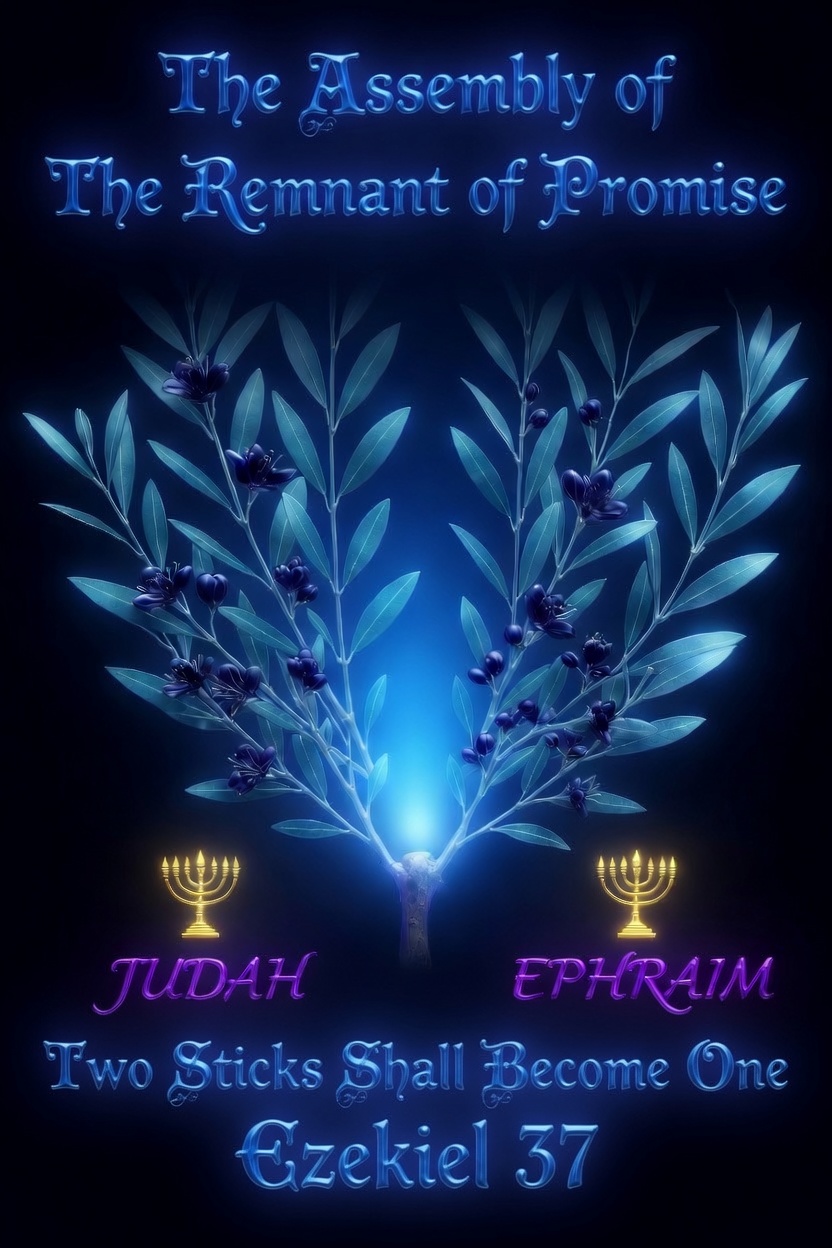
The two-category framework — Jew and Gentile — collapses when the prophets are read at face value. Isaiah 11:11–12 names both the outcasts of Yashar’el (Israel) and the dispersed of Yahudah (Judah) as separate gatherings. Ezekiel 37 names the two sticks. Jeremiah 31 names both houses in the new covenant. The cumulative witness of the prophets refuses the inherited binary. The category the inherited pulpit erased is the scattered seed of Yashar’el (Israel) as a distinct paternal-blood people the Father has been gathering across the centuries. Without that category in view, the gospel’s own structure is misread.
The “lost ten tribes” reading collapses against the prophetic specificity. The Father did not just generally scatter; he named the place, the time, the means, the recovery, and the covenant terms of the recovery. Yet I will leave a remnant, that ye may have some that shall escape the sword among the nations, when ye shall be scattered through the countries… And they that escape of you shall remember me among the nations whither they shall be carried captives, when I have broken their whorish heart (Ezekiel 6:8–9). The remembering is the prophetic recovery. The Father does not lose what he scattered. He is bringing them back, and the bringing back is named across Isaiah, Jeremiah, Ezekiel, Hosea, Amos, Micah, Zephaniah, Zechariah — every prophet who took up the question of the divorced house. Sound the trumpet in Tsion (Zion)… gather the people, sanctify the assembly, gather the elders… For Yahuah (God) hath spoken in his holy mountain (Joel 2:1, 16, 23).
The “Gentile inclusion” reading of Paul collapses when the audience is read in light of the prophets Paul cites. Paul quotes Hosea 1:10 (the divorced house being recovered) and Hosea 2:23 (I will say to them which were not my people, Thou art my people) in Romans 9:25–26 to describe his audience. Hosea named that audience: the divorced northern kingdom. Paul applied it as it was written. The Galatians, the Ephesians, the Colossians, the Thessalonians — assemblies Paul planted among populations historically associated with the dispersion of the northern tribes — were not random pagan converts. They were the lost sheep Yahusha (Jesus) was sent to (Matthew 15:24), being brought home by the apostle of the uncircumcision (Galatians 2:7).
The four-costumes-share-one-lie reading is what scripture itself teaches once the diagnostic is applied. The Pharisees voided Torah by addition of tradition (Mark 7:13). Galatian agitators voided the covenant order by inverting Genesis 15 (faith) and Genesis 17 (circumcision). Modern institutional Christianity voided Torah by subtraction (Sabbath replaced, feasts replaced, dietary laws null, sacred name buried). Hebrew Roots’ false-inclusion gospel voids the seed-distinction Torah maintained. Islam voids the lineage by transferring the covenant to Ishmael against the explicit Genesis text. Same flesh-credential gospel of conversion-saves. Same nullification of Torah, whether by addition, subtraction, inversion, or transfer. All four are the Judaizer error in different fabric. The inherited pulpit, sitting inside one of those four systems, cannot see the architecture without exiting the system — which is why Jeremiah 16:19 is the awakening confession across all four.
The framework reads the antichrist as scripture wrote it: a spirit operating from the first century until it manifests in a final figure, identifiable by what it teaches against the Father’s covenant work, located historically in the systems that have denied the prophetic gathering of all twelve tribes.
The foundational lie is the denial of the twelve-tribe gathering. Every system that claims to carry the covenant — Christianity, Judaism, Hebrew Roots, Islam — shares one structural denial: that Yahuah (God) will gather a paternal blood remnant of all twelve tribes of Yashar’el (Israel) home. The shape of the lie is a binary — Yahudah (Judah) and everyone else. The ten northern tribes, divorced for breaking the covenant, scattered through the Assyrian captivity, and dispersed until they forgot whose they were, are treated as gone, absorbed, retired from the covenant, or spiritualized into a category open to anyone who joins. Two slots remain in the architecture: the Yahudim (Jews) of Yahudah (Judah) on one side, the Gentiles on the other. Whatever the system calls itself, that two-slot arrangement is the lie’s actual shape.
Scripture refuses the binary at every level. Isaiah 11:11–12 names two distinct gatherings — the outcasts of Yashar’el (Israel) and the dispersed of Yahudah (Judah) — as the second recovery. Ezekiel 37 takes two sticks and joins them in his hand. Jeremiah 31 names both houses in the new covenant. Paul cites Hosea 1:10 and applies it as Hosea wrote it — the divorced house being recovered, called the sons of the living Elohim (God). The framework restores what scripture has been carrying. Three categories: Yahudah (Judah), the scattered seed of Yashar’el (Israel), the nations. The first two are the covenant people of the two-house oath; the third walks alongside as Torah stranger and sojourner.
The antichrist is the system, not just a future figure. Even now are there many antichrists (1 John 2:18). Already is it in the world (1 John 4:3). The spirit of antichrist operates in any system that denies the Father’s covenant work — that calls him a liar by denying what he promised. The future man of sin (2 Thessalonians 2:3–4) is the culmination of an operation that has been running across the ages, not a sudden arrival from outside the centuries of accumulated antichrist activity. Daniel 7:25’s horn — speaking great words against the Most High, wearing out the saints, thinking to change times and laws — has been operating in the institutional pulpit’s architecture since the fourth century. The inherited reading lost the spirit and kept only the figure. The framework restores both: the spirit operating across the ages, the figure who will manifest at the end as the spirit’s full revealing.
The four costumes worship the antichrist to the degree that they deny the gathering. Christianity replaces Yashar’el (Israel) with the church and pronounces the divorced house permanently retired. Judaism collapses the covenant into Yahudah (Judah) alone and overrules the prophets who named the northern gathering. Hebrew Roots false-inclusion teaching makes the Torah-observant community the new Yashar’el (Israel) by self-selection, with the same erasure of the specific covenant people. Islam transfers the covenant to Ishmael, against the explicit Genesis lineage. Four costumes. One denial. Same antichrist seat in different fabric.
The people inside the systems are not the antichrist; they are victims of it. Surely our fathers have inherited lies (Jeremiah 16:19). The grandmother who has prayed inside any of these systems for sixty years is not the system. The deception was handed to her, in good faith, by sincere teachers who were handed it by sincere teachers before them. The framework attacks systems and never people. The Yahudi (Jew) in Yahudah (Judah), the Christian in his pew, the Hebrew Roots brother at his feast, the Muslim at his prayers — all four are loved. The systems they were handed are what we are dismantling. They are also the lost sheep.
The criterion for identifying the antichrist system is doctrinal, applied through the 1234 of Truth. He that saith, I know him, and keepeth not his commandments, is a liar (1 John 2:3–4). Apply the test as a question to any system: does what it teaches stand with the Father’s Torah, his prophetic covenant promises, and his named gathering of the twelve tribes — or does it stand against them? The system that teaches the abolition of Torah, the retirement of the gathering, the substitution of a counterfeit Yashar’el (Israel), or the transfer of the covenant to a different people is the antichrist system in whatever costume it is wearing. The test is the Word’s. The framework is not inventing it.
The lie has had its run because the Father is using it. The systems run on borrowed darkness, and the borrowing is real. We wrestle not against flesh and blood, but against principalities, against powers, against the rulers of the darkness of this world, against spiritual wickedness in high places (Ephesians 6:12). The spirits are in control of the systems. Yahuah (God) is in control of the spirits. He has allowed the lie its hour because under it he is gathering his sheep and refining those gathered. The hour of its undoing is the hour he has appointed, and the hour has come. The seed the prophets named is being gathered. The pulpits will say it cannot be. The Father is doing it anyway.
The reader’s posture toward the systems and their inhabitants is the posture scripture commands. Toward the systems: dismantle. Name the architecture. Apply the test. Refuse the lie’s premise. Do not soften the diagnostic into something the system can absorb without changing. Toward the people inside the systems: patience, not condescension. They are also lost sheep. Surely our fathers have inherited lies — and our is the word that does the work. The verse applies to them. The verse applies to us.
The inherited pulpit lost both: the antichrist as present spirit, and the gathering as present work. The framework restores both. We are watching the gathering. We are dismantling the systems that say it is not happening. The lie has had its run.
Layer 3 expansion complete. The doorway opens to the long form’s §IX (The Four Costumes), §X (The Three Categories), and §XI (The Judaizer Error Across the Ages) for the deeper architectural treatment of how the lie wears its costumes and how the test exposes each one.