A Deeper Dive — Statement of Faith §X
The expanded apologetic for §X of the Statement of Faith — what most preachers teach on this subject, where the inherited reading falls short of scripture, and how the framework reads the same scripture faithfully.
The inherited Christian pulpit reads scripture’s framework as two categories — Jew and Gentile. The Old Testament was the Yahudim (Jews); the New Testament opened the gospel to the Gentiles; together they form the church. Paul’s letters are read through this binary: there is neither Jew nor Greek (Galatians 3:28) is treated as the doctrinal summary, with the binary being collapsed in Christ into a single new people on equal terms.
Around this center, four secondary teachings cluster:
The Gentiles in Paul’s letters are read as non-Yahudi (non-Jewish) people of any nation, gathered into the body of believers through the gospel of grace. The fact that Paul cites Hosea 1:10 (the divorced house being recovered) in Romans 9:25–26 to describe his audience is read as the apostle applying a historical Yahudi (Jewish) prophecy to a new Gentile category. The fact that Paul calls himself the apostle to the uncircumcision (Galatians 2:7) — a term that in Hosea’s prophetic frame names the divorced northern house — is read as referring to the uncircumcised Gentiles generically.
The “scattered tribes” of Yashar’el (Israel) are taught as either irrelevant to the gospel or as a separate program for the millennial reign. The dispensational stream allows the twelve tribes to come back into focus during a future seven-year tribulation period, but treats this as a separate dispensation from the present church age. The covenant theology stream collapses the twelve tribes into the true Israel of all believers and assigns prophetic restoration language to the church fulfilling those promises spiritually. In neither stream is the present-tense gathering of the scattered seed of Yashar’el (Israel) recognized as the central work the Father is doing right now.
The Torah stranger and sojourner — the foreigner who joined himself to Yahuah (God)’s people across scripture — is taught as either a vestigial category (no longer applicable since the cross opened the door to all on equal terms) or as a typological foreshadowing of Gentile inclusion (the stranger becoming the believer who is now full Yashar’el (Israel) in Christ). The distinction Torah maintained between the seed of promise and the foreigner who walks alongside the household is dissolved.
Neither Jew nor Greek (Galatians 3:28) is read as the abolition of all distinction in covenant identity. Whatever the Old Testament said about lineage, tribe, or paternal blood-seed is collapsed into a single new category called the church, with all distinctions abolished in Christ. The fact that Paul, in the same Galatians, calls himself of the stock of Israel, of the tribe of Benjamin (Philippians 3:5) and traces his lineage with care, is left unaddressed.
This is the gospel the awakening reader was handed about the framework. Two categories. The first one closed; the second one universal. The seed the prophets named was filed under category one and declared retired; everyone else was filed under category two and welcomed into a new spiritual Yashar’el (Israel) on equal terms.
The reading collapses against the prophets who named both houses, against the apostles who maintained the distinction, and against the Father’s own oath which named a paternal blood seed he could not retire without breaking his word.
Isaiah 11:11–12 names two distinct gatherings, side by side, as the second recovery. And it shall come to pass in that day, that Yahuah (God) shall set his hand again the second time to recover the remnant of his people… and shall assemble the outcasts of Yashar’el (Israel), and gather together the dispersed of Yahudah (Judah) from the four corners of the earth. The verse names the outcasts of Yashar’el (Israel) as one category and the dispersed of Yahudah (Judah) as another. The two are not the same. The two are gathered together, in the same recovery, by the same Father — but they are named separately because they are separately scattered, separately identified, and separately recovered. The inherited reading collapses both into one Israel and erases the prophet’s own distinction.
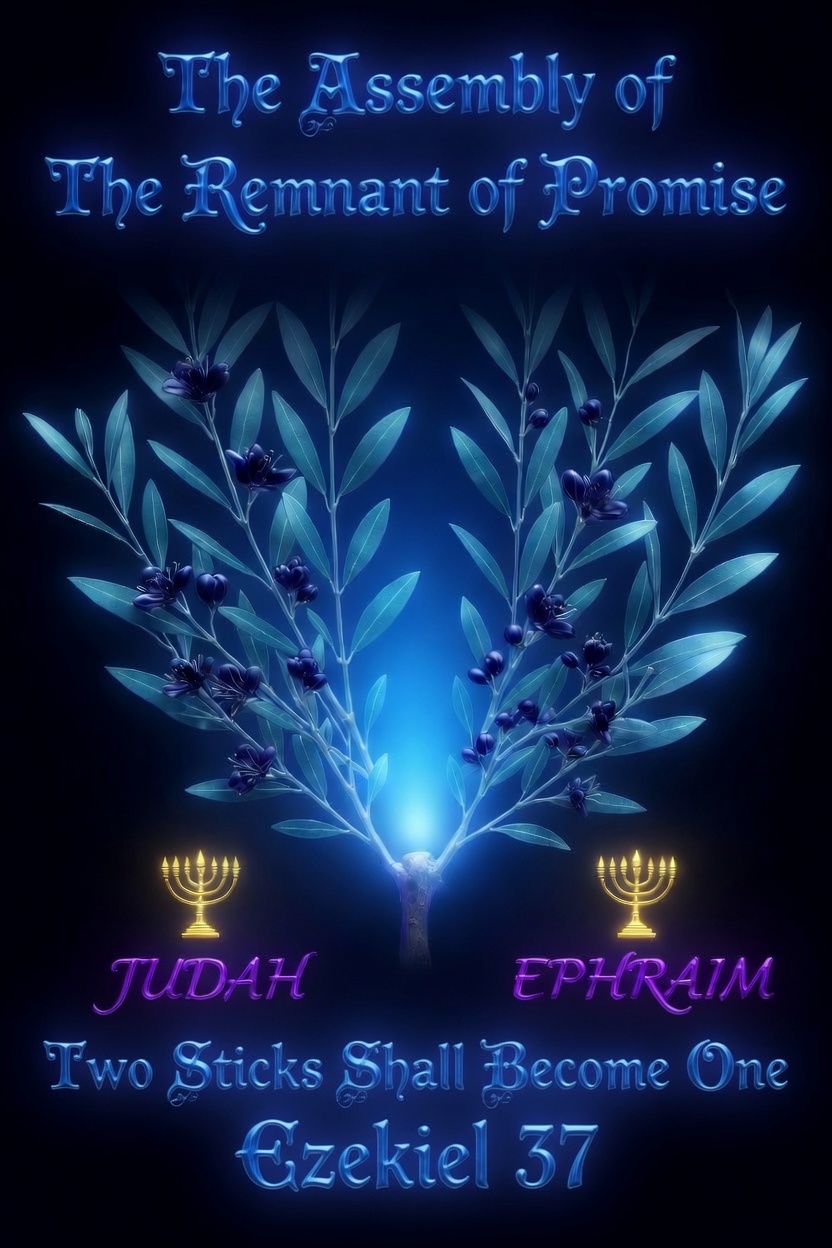
Ezekiel 37:15–22 makes the two-house structure explicit. Take thee one stick, and write upon it, For Yahudah (Judah), and for the children of Yashar’el (Israel) his companions: then take another stick, and write upon it, For Joseph, the stick of Ephraim, and for all the house of Yashar’el (Israel) his companions. Two sticks. Two names. Two distinct houses, with their tribal members named under each. And join them one to another into one stick; and they shall become one in thine hand (Ezekiel 37:17). The joining is the work being done. The sticks remain distinct until they are joined. The inherited reading flattens the two sticks into one before the joining and erases the work the prophet describes.
Jeremiah 31:31 keeps the houses distinct in the new covenant promise itself. Behold, the days come, saith Yahuah (God), that I will make a new covenant with the house of Yashar’el (Israel), and with the house of Yahudah (Judah). Both houses, named separately, party to the same new covenant. The reading that collapses them into one body called the church erases the prophet’s specificity. The verse will not collapse. The new covenant is made with both houses — the actual paternal seed of both kingdoms — and the heathen who join themselves to Yahuah (God) walk under it as the Torah stranger and sojourner the prophets and apostles always carried.
Hosea 1 names the audience of Lo-Ammi directly and unmistakably. The chapter is about the northern kingdom — call her name Lo-Ruhamah: for I will no more have mercy upon the house of Yashar’el (Israel)… for the house of Yahudah (Judah) will I have mercy (Hosea 1:6–7). The mercy is withheld from the northern house and continued to the southern house. Then said Yahuah (God), Call his name Lo-Ammi: for ye are not my people, and I will not be your Elohim (God) (Hosea 1:9). Lo-Ammi is pronounced over the northern kingdom specifically. Verse 10’s reversal — in the place where it was said unto them, Ye are not my people, there it shall be said unto them, Ye are the sons of the living Elohim (God) — is the reversal of that divorce, on that people, in the very place they were divorced. The inherited reading lifts verse 10 out of its chapter and turns it into a generic Gentile inclusion verse. The chapter refuses. The audience is named at the start of the chapter and held through it. Paul knew this when he cited the verse in Romans 9:25–26. He named the audience he was being sent to as the divorced house being recovered.
The “Gentile inclusion” reading of Paul collapses when Gentile is read in the prophetic frame Paul himself used. The Greek word ethnē — translated Gentiles in the King James and most subsequent versions — is the same word the Septuagint uses to translate the Hebrew goyim, which can mean the nations in a general sense or, in specific prophetic contexts, the divorced house living among the nations. Hosea 8:8 names the northern kingdom as already become as a vessel wherein is no pleasure — swallowed up among the Gentiles (Hosea 8:8) — using the same word. Yashar’el (Israel) is swallowed up — and the swallowing was into the Gentiles. By the time of Paul’s mission, the descendants of the divorced house had been living as Gentiles for seven hundred years. They had become indistinguishable from the nations they had been scattered into. They were Gentiles by appearance, by language, by practice. Paul was sent to them not as outsiders being grafted onto a Yahudi (Jewish) stem, but as the lost sheep of the house of Yashar’el (Israel) being brought home (Matthew 15:24).
Paul’s own naming of his audience proves the case. That at that time ye were without Messiah (Christ), being aliens from the commonwealth of Yashar’el (Israel), and strangers from the covenants of promise, having no hope, and without Elohim (God) in the world: but now in Messiah (Christ) Yahusha (Jesus) ye who sometimes were far off are made nigh by the blood of Messiah (Christ) (Ephesians 2:12–13). Aliens from the commonwealth — the language of divorce, not the language of foreigners who were never part. Strangers from the covenants of promise — strangers to covenants that were originally theirs. Made nigh by the blood — restored to a covenant they had been part of. The inherited reading places this passage on Gentile pagans being included in a new people. The verse describes the divorced house being brought back to a covenant they were originally party to.
The Torah stranger and sojourner is not vestigial; it is preserved across the prophets and into the millennial reign. Also the sons of the stranger, that join themselves to Yahuah (God), to serve him, and to love the name of Yahuah (God), to be his servants, every one that keepeth the sabbath from polluting it, and taketh hold of my covenant; even them will I bring to my holy mountain, and make them joyful in my house of prayer (Isaiah 56:6–7). Isaiah 56 maintains the stranger as a distinct category in the kingdom. He keeps the Sabbath. He takes hold of the covenant. He is brought into the house of prayer. He is loved. He is sustained. He is not declared Yashar’el (Israel) by joining; he is welcomed into the house where Yashar’el (Israel) lives, on the same Sabbath, under the same roof, before the same Father. The distinction between Yashar’el (Israel) and the stranger that sojourneth is preserved through Isaiah’s millennial vision. The inherited reading collapses the two and produces a flat one new man category that scripture does not produce.
Neither Jew nor Greek (Galatians 3:28) does not abolish covenant identity. The verse is in a passage about access to the promise — for ye are all the children of Yahuah (God) by faith in Messiah (Christ) Yahusha (Jesus) (Galatians 3:26). The Judaizers in Galatia were teaching that the scattered seed living as Gentiles had to first become Yahudim (Jews) through ritual circumcision before they could access the promise. Paul refuses that hierarchy. The circumcised and the uncircumcised (in Paul’s prophetic frame, the southern house and the divorced northern house) have equal standing before the promise. The verse removes the circumcision-party’s hierarchy of access. It does not abolish the categories the prophets maintained. Paul himself names his own tribe in Philippians 3:5. James writes to the twelve tribes which are scattered abroad (James 1:1) — naming the twelve tribes as the audience, not collapsing them. John names the twelve tribes by name in Revelation 7:4–8 — naming them in the eschatological vision, with twelve thousand sealed from each. The tribal identity is maintained from Genesis through Revelation.
The 1234 of Truth applied to the binary: does the Jew and Gentile framework require any line of Hosea 1, Isaiah 11, Jeremiah 31, Ezekiel 37, Romans 9, Romans 11, James 1, or Revelation 7 to be retired or allegorized? Yes. Multiple lines from each. Yahuah (God) is not a man, that he should lie (Numbers 23:19). The Father has not retired the seed he named. The framework that requires him to have done so is not the framework scripture carries.
The framework reads scripture’s framework as scripture wrote it. Three categories. Two houses of the covenant people, distinct paternal-blood lineages with separate prophetic traces and separate gatherings, joining together as one stick in the Father’s hand. The nations alongside, welcomed, loved, sustained — the Torah stranger and sojourner who walks under the same Sabbath, eats at the same table, worships before the same Father, and carries his place in the kingdom of priests’ ministry to the nations. We did not invent this framework. The prophets gave it. The apostles preserved it. The Father has been keeping it through every age.
Yahudah (Judah). The southern house. Primarily the tribe of Yahudah (Judah), with portions of Levi and Benjamin who remained after the kingdom split under Jeroboam. The Yahudim (Jews) of the modern world. They retained their identity through every exile — language, scripture, name, lineage — and are identifiable as a people to this day. They are not all of Yashar’el (Israel). They are one house of a two-house covenant people, and they have carried what they were given through every fire that came for them. Yahuah (God) preserved them; Yahuah (God) loves them; Yahuah (God) is gathering the dispersed of Yahudah (Judah) home in the same recovery he is gathering the outcasts of Yashar’el (Israel) home (Isaiah 11:11–12).
The scattered seed of Yashar’el (Israel). The ten northern tribes. Reuben, Simeon, Issachar, Zebulun, Dan, Naphtali, Gad, Asher, Ephraim, Manasseh — divorced for breaking the covenant (Jeremiah 3:8), scattered through the Assyrian captivity (722 BC), dispersed among the nations until they became indistinguishable from the nations — Lo-Ammi, not my people (Hosea 1:9). They lost the language. They lost the Torah. They lost the name they had been given. They are not a metaphor; they are a paternal blood seed Yahuah (God) named, traced, and promised to recover. Hosea immediately followed the divorce verdict with the gathering verdict — in the place where it was said unto them, Ye are not my people, there it shall be said unto them, Ye are the sons of the living Elohim (God) (Hosea 1:10). Paul quoted both verses in Romans 9:25–26 because he knew exactly who he was being sent to. I am not sent but unto the lost sheep of the house of Yashar’el (Israel) (Matthew 15:24). The lost sheep are not a category open by self-selection. They are a people Yahuah (God) is bringing home.
The nations. Those who are not of the paternal blood seed of Yashar’el (Israel). They are not absent from the covenant household; they are welcomed into it. The mixed multitude came up out of Egypt with Yashar’el (Israel) and was numbered in the camp (Exodus 12:38). Torah gave the stranger his own provisions — one law shall be to him that is homeborn, and unto the stranger that sojourneth among you (Exodus 12:49; cf. Numbers 15:14–16). Isaiah 56 names them by name: the sons of the stranger, that join themselves to Yahuah (God), to serve him, and to love the name of Yahuah (God)… them will I bring to my holy mountain, and make them joyful in my house of prayer (Isaiah 56:6–7). The stranger is fed at the same table, sheltered under the same roof, sanctified by the same Sabbath, and loved by the same Father. He is not the seed of promise. He does not become the seed by joining. The household has a son and a sojourner, both wanted, both welcomed, both kept — and the distinction between them is not a wall the assembly built. It is the household’s actual shape.
The distinction is not gatekeeping. The framework does not declare any reader’s lineage. The Father knows his own. Yahuah (God) knoweth them that are his (2 Timothy 2:19). The reader may be of the dispersed of Yahudah (Judah), of the scattered seed of Yashar’el (Israel), or of the nations who join themselves to Yahuah (God). The Father knows. We do not appoint ourselves the gatekeepers at his door. What the framework does is honor scripture’s framework — refuse to flatten what the prophets distinguished, refuse to retire what the Father has not retired, and refuse to substitute a counterfeit for the seed of promise. Be not deceived; Yahuah (God) is not mocked (Galatians 6:7).
The cause-and-effect runs the way scripture lays it down. My sheep hear my voice, and I know them, and they follow me (John 10:27) — but ye believe not, because ye are not of my sheep (John 10:26). The hearing reveals what was always true. If a reader hears when the Shepherd calls, that is because he is his sheep. The hearing does not make him a sheep; it reveals that he was. And other sheep I have, which are not of this fold: them also I must bring, and they shall hear my voice; and there shall be one fold, and one shepherd (John 10:16). The other sheep are not pagan converts grafted onto a Yahudi (Jewish) stem. They are the lost sheep of the scattered house, separated from the southern fold by seven centuries of exile when Yahusha (Jesus) spoke that line, scattered further still when he ascended, and being gathered now through the same Shepherd’s voice.
The kingdom of priests is the destination of the gathered. And ye shall be unto me a kingdom of priests, and an holy nation (Exodus 19:6). Unto him that loved us, and washed us from our sins in his own blood, and hath made us kings and priests unto Yahuah (God) and his Father (Revelation 1:6). The refined remnant from the wilderness sifting will reign with the Messiah (Christ) on the earth in the millennial reign. The other nations — those left alive of the harvest, who walked alongside the gathered as Torah stranger and sojourner in this age — will come up to receive Torah from Tsion (Zion) and to keep the feast of tabernacles (Zechariah 14:16; Isaiah 2:3). The kingdom of priests has nations to serve. The household has a son and a sojourner, and both have a place in what the Father is building.
The framework refuses the binary because scripture does. Jew and Gentile is not the architecture. It is the costume the foundational lie wears in one of its houses. The framework restores what scripture has been carrying. Three categories. Two houses of the covenant. The nations alongside. The Father gathering all twelve tribes home, the second time, from the four corners of the earth.
The reader who has been handed the binary may have heard the framework for the first time in this document. We did not invent it; we are receiving it. The seed the prophets named is being gathered. The substitution has had its run.
Layer 3 expansion complete. The doorway opens to the long form’s §III (The Promise Kept) and §XII (The Two-House Restoration) for the deeper architectural treatment of how the gathering moves and how Romans 11 reads against the inherited inclusion gospel.