A Deeper Dive — Statement of Faith §III
The expanded apologetic for §III of the Statement of Faith — what most preachers teach on this subject, where the inherited reading falls short of scripture, and how the framework reads the same scripture faithfully.
Walk into the average pulpit and listen to the gospel as it has been handed down for seventeen centuries. The gospel is for the world. The cross is the offer of salvation to anyone, anywhere, who will believe. Yahusha (Jesus) came to save sinners — and sinners gets defined as the generic human, regardless of lineage, regardless of covenant history, regardless of which house any reader was born into. Salvation is open to all on equal terms. The Old Testament was a chapter the Father wrote with one ethnic group; the New Testament is the chapter where he opened the door to everyone else. The Yahudim (Jews) were the first audience. The world is the second audience. Whosoever will, let him take the water of life freely (Revelation 22:17) — the inherited pulpit lifts that line as proof that lineage was retired and a single universal category replaced it.
Around this center, four secondary teachings cluster:
The promises Yahuah (God) made to the twelve tribes were either fulfilled in the first century, were fulfilled spiritually in the body of Christian believers, or were transferred to a new covenant people composed of all who believe regardless of bloodline. The northern tribes of Yashar’el (Israel) — Reuben, Simeon, Issachar, Zebulun, Dan, Naphtali, Gad, Asher, Ephraim, Manasseh — are pronounced absorbed, lost, or spiritualized into something else. The Father’s specific oath about bringing them home from the lands of their dispersion is treated as a metaphor for whatever revival is currently happening in any of the four costumes.
The “lost sheep of the house of Israel” Yahusha (Jesus) said he was sent to (Matthew 15:24) is read as a symbol for spiritually lost humanity, not as the actual paternal blood seed Yahuah (God) had divorced and scattered. The phrase becomes a poetic way of saying anyone who is lost, not the prophetic commission to gather a specific people the prophets had named.
The Lo-Ammi declaration of Hosea 1:9 — ye are not my people — is taught as Yahuah (God)’s judgment on the unbelieving world, fulfilled by Christianity’s expansion, with Hosea 1:10’s restoration verse becoming a description of “Gentile inclusion” in the body of believers. The fact that the same prophet promised, in the very next breath, that the same Lo-Ammi would be reversed and the divorced house would be called the sons of the living Elohim (God) is folded into universal Gentile inclusion language. Paul’s quotation of these verses in Romans 9:25–26 is read as proof of the same — now anyone can be God’s people.
The Father’s gathering oath in Ezekiel 36 (I will take you from among the heathen, and gather you out of all countries) is allegorized into the gathering of all believers into the body of Christ. Wherever the prophet says house of Yashar’el (Israel), the inherited pulpit substitutes the church. Wherever the prophet names specific tribes, the inherited reading either dissolves the names into a generic believers or assigns them to apocalyptic categories disconnected from the prophetic restoration the verses actually describe.
This is the gospel the awakening reader was handed. The promise was retired. A substitute was installed. The seed the prophets named was declared spiritualized away. The framework the rest of this Statement of Faith leans on does not exist in this telling, because the people the framework names were already pronounced gone.
Scripture refuses the substitution at every level. The promise the Father made was specific, named the people by tribal identity, traced their scattering by geography, and named their gathering as a second recovery. The inherited reading dissolves all four specifics into one universal category, and the verses the inherited reading dissolves them with do not say what the reading says they say.
Isaiah 11:11–12 names the second gathering by name. And it shall come to pass in that day, that Yahuah (God) shall set his hand again the second time to recover the remnant of his people… and shall assemble the outcasts of Yashar’el (Israel), and gather together the dispersed of Yahudah (Judah) from the four corners of the earth. Two distinct gatherings. The outcasts of Yashar’el (Israel) and the dispersed of Yahudah (Judah). Two houses, named separately, gathered separately, by the same Father, in the same recovery, the second time. The first time was the partial return from Babylon. The second time is what the prophet pointed forward to — and the second time has not yet been completed. The visible Yahudim (Jewish) presence in modern-day Israel is part of the dispersed of Yahudah (Judah) coming home, but the outcasts of Yashar’el (Israel) — the ten northern tribes scattered through the Assyrian captivity — are still being gathered out of the nations where Yahuah (God) put them. The gathering the inherited pulpit allegorized is the gathering scripture is currently describing in present tense.
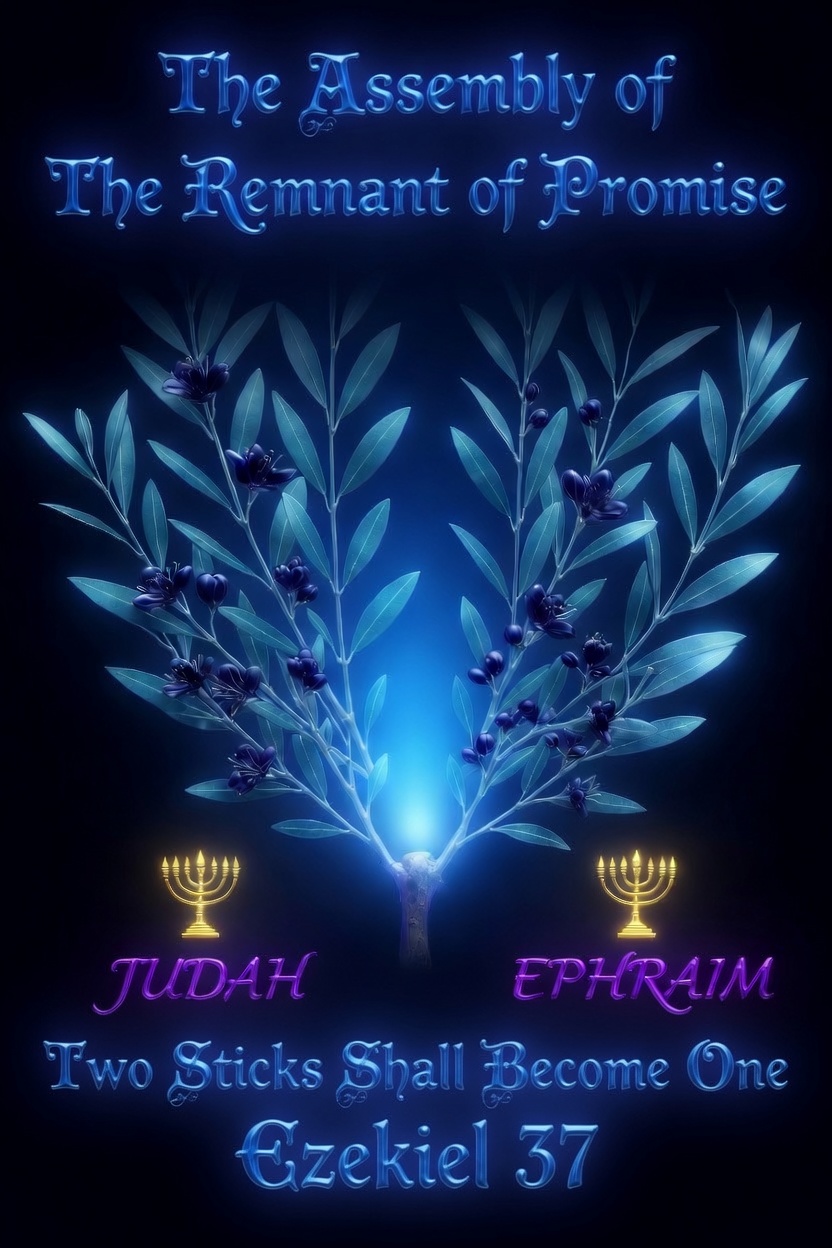
Ezekiel 37 makes the two-house structure unmistakable. I will take the stick of Joseph, which is in the hand of Ephraim, and the tribes of Yashar’el (Israel) his fellows, and will put them with him, even with the stick of Yahudah (Judah), and make them one stick (Ezekiel 37:19). Two sticks, named separately, joined in his hand, made one. The pulpit reading flattens both sticks into the one inherited spiritual Israel and erases the joining. Scripture does not do that. The two sticks remain distinct until the Father joins them, and the joining is the work he is doing, not the work the inherited body declared finished.
Jeremiah 31 keeps the houses distinct in the new covenant promise itself. Behold, the days come, saith Yahuah (God), that I will make a new covenant with the house of Yashar’el (Israel), and with the house of Yahudah (Judah) (Jeremiah 31:31). Both houses, named separately, party to the same new covenant. The inherited reading collapses them into one body called the church and treats the two-house naming as a stylistic doublet. The verse will not collapse. The new covenant is made with both houses — the actual paternal seed of both kingdoms — and the heathen who join themselves to Yahuah (God) walk under it as the Torah stranger and sojourner the prophets and apostles always carried, never as a substitute for the seed.
Hosea’s Lo-Ammi is the test case. The inherited reading takes Hosea 1:10 (it shall be said unto them, Ye are the sons of the living Elohim (God)) and reads it as the Gentile inclusion of universal believers. But the same passage names the audience of Lo-Ammi in the very same chapter — Hosea’s children, whose names declare prophetic verdicts on the northern kingdom (Hosea 1:6–9). Lo-Ammi was pronounced over the house of Yashar’el (Israel) — the divorced northern tribes Yahuah (God) had scattered. Hosea 1:10’s reversal is the reversal of that divorce, on that people, in the place where it was said unto them, ye are not my people. Paul did not miss this. He quotes both verses in Romans 9:25–26, names the audience as those who were not my people now called my people — the divorced house being recovered, the same Hosea 1 people, the lost sheep he was sent to (Matthew 15:24). He quotes Isaiah 49:6 about being a light to the Gentiles and ties it to the commission of raising up the tribes of Jacob and restoring the preserved of Israel (Acts 13:47, citing Isaiah 49:6). The apostle’s own framing was the prophetic gathering of the scattered, not a transfer of the covenant to a different people.
Paul’s letters were, in large part, written to the scattered seed. The Gentiles he addresses in Galatians, Ephesians, Colossians, Thessalonians, and Romans are not random pagans being added to a new spiritual Israel. They are the lost sheep of the house of Israel — the divorced northern tribes living as Gentiles among the nations because they had forgotten whose they were. That at that time ye were without Messiah (Christ), being aliens from the commonwealth of Yashar’el (Israel), and strangers from the covenants of promise, having no hope, and without Elohim (God) in the world: but now in Messiah (Christ) Yahusha (Jesus) ye who sometimes were far off are made nigh by the blood of Messiah (Christ) (Ephesians 2:12–13). Aliens from the commonwealth — that is divorce language. Strangers from the covenants of promise — strangers to covenants that were originally theirs. Made nigh by the blood — restored to a covenant they had been part of. The inherited reading places that passage on Gentile pagans being included in a new people. The verse describes the divorced house being brought back to a covenant they were originally party to. Read against the Hosea 1 / Romans 9 structure, the passage opens.
The “lost sheep of the house of Yashar’el (Israel)” is not a metaphor. I am not sent but unto the lost sheep of the house of Yashar’el (Israel) (Matthew 15:24). The Greek does not soften. The phrase names the divorced house Hosea named. The “other sheep” of John 10:16 — other sheep I have, which are not of this fold: them also I must bring — are not pagan converts grafted onto a Jewish stem. They are the lost sheep of the scattered house, separated from the southern fold by seven centuries of exile when Yahusha (Jesus) spoke that line. They shall hear my voice; and there shall be one fold, and one shepherd. The hearing is the proof the sheep are his (John 10:26–27). The two folds become one in the work the Shepherd is doing now.
The cross was not the moment the promises got transferred to a substitute. I am not sent but unto the lost sheep came from his own mouth, after his death and resurrection were already in motion, after he knew the cross was three years out. The cross is the keeping of the oath, not the abandonment of the people he swore it to. For I say that Yahusha (Jesus) Messiah (Christ) was a minister of the circumcision for the truth of Yahuah (God), to confirm the promises made unto the fathers (Romans 15:8). The Messiah’s (Christ’s) ministry was the confirmation of the promises to the fathers — Abraham, Isaac, Jacob, the twelve tribes — not the cancellation of those promises in favor of a new people on different terms.
The 1234 of Truth applied to the substitution gospel: does the inherited reading of the church replaced Israel require any single line of Hosea, Isaiah, Jeremiah, or Ezekiel about the gathering of the twelve tribes to be false? Yes. Multiple lines. The reading does not survive contact with the prophets it claims to interpret. Yahuah (God) is not a man, that he should lie; neither the son of Adam, that he should repent: hath he said, and shall he not do it? or hath he spoken, and shall he not make it good? (Numbers 23:19). The inherited reading requires him to have said and not done. Scripture refuses.
The framework reads the prophets the way the prophets wrote them. It reads the apostles the way they read the prophets. It does not invent a new mechanism. It restores the one scripture has been carrying.
The promise is specific, and it is being kept. Yahuah (God) swore an oath to Abraham, confirmed it to Isaac, settled it on Jacob, named it over the twelve tribes that came from him. Know therefore that Yahuah (God) thy Elohim (God), he is Elohim (God), the faithful Elohim (God), which keepeth covenant and mercy with them that love him and keep his commandments to a thousand generations (Deuteronomy 7:9). A thousand generations is the measure scripture gives — vastly longer than the age of the earth, vastly longer than any window in which a substitution could complete. The covenant runs the entire length of scripture and is being kept in the present tense. The gathering of the scattered that is happening across the world right now — the awakening, the return to the Sabbath and the feasts, the recognition of covenant identity by people who did not know they had it — is the prophetic recovery in motion.
The oath was sworn to a paternal blood seed. Yahuah (God) swore by himself when there was no one greater (Hebrews 6:13–14). The seed he named was Abraham’s, by Sarah, in the line of promise — Isaac, not Ishmael (Genesis 17:19–21); Jacob, not Esau (Romans 9:10–13). The twelve tribes came from Jacob, by paternal lineage, named, traced, and recorded across every census in scripture. The seed is not a category open by self-selection. It is the people the prophets named. The Father is gathering that people from the nations he scattered them into.
The framework is three, not two. The house of Yahudah (Judah) — the Yahudim (Jews) of the modern world — kept their identity through every exile. The scattered seed of Yashar’el (Israel) — the ten northern tribes — were divorced and dispersed until Hosea’s Lo-Ammi came to rest on them, with the very same prophet’s promise that the season would end and they would be called sons of the living Elohim (God) again. The nations — those not of the paternal blood seed — walk alongside the covenant household as Torah stranger and sojourner, welcomed, loved, sustained by every provision Torah makes for the foreigner who joins himself to Yahuah (God), but not the seed of promise. The household has a son and a sojourner, both wanted, both kept, and the distinction is not gatekeeping. It is the household’s actual shape.
The Lo-Ammi was for a season. Hosea 1:9 and Hosea 1:10 are one motion. The divorce and the gathering are the same prophet, the same Father, the same people. Paul knew that, which is why he quoted both verses in Romans 9:25–26 and named the audience as the divorced being recovered. The pulpits that rose in the fourth century pronounced the Lo-Ammi as permanent, declared themselves the new Yashar’el (Israel), and overruled the very prophet whose verse they cited. The pulpit’s verdict is not the Father’s. The seed the prophets named is being gathered. The substitution has had its run.
The cross is the keeping of the oath, not the abandonment of it. Yahusha (Jesus) was sent unto the lost sheep of the house of Yashar’el (Israel) (Matthew 15:24). The cross opened the door home for the divorced (Galatians 3:13 redeeming from the curse of exile), bound the scattered seed to the new covenant Jeremiah promised (Jeremiah 31:31), and confirmed the promises to the fathers (Romans 15:8). The Father did not retire the people he swore to. He paid for them. The blood-bought are the seed the oath named — purchased with his own blood (Acts 20:28), redeemed… out of every kindred, and tongue, and people, and nation (Revelation 5:9), gathered out of the four corners of the earth where he scattered them (Isaiah 11:12).
The nations are loved, and they are not the seed. The Torah stranger has a place at the household’s table. One law shall be to him that is homeborn, and unto the stranger that sojourneth among you (Exodus 12:49). The sons of the stranger, that join themselves to Yahuah (God), to serve him, and to love the name of Yahuah (God)… them will I bring to my holy mountain, and make them joyful in my house of prayer (Isaiah 56:6–7). The stranger who joins is fed at the same table, sheltered under the same roof, sanctified by the same Sabbath, and loved by the same Father. He is not the seed of promise. He does not become the seed by joining. The framework does not erase his welcome; it tells him the truth about the household he has been welcomed into. The kingdom of priests on the earth in the millennial reign will minister to the nations who survive the harvest (Zechariah 14:16; Isaiah 61:6). The stranger who walked alongside the seed in this age has a place in the kingdom the priests will serve.
We are watching the promise be kept. This is the line the inherited pulpit cannot say without unsettling its own foundation. The prophets foretold a gathering. The gathering is in motion. The seed the prophets named — divorced, scattered, lost, forgotten — is being recovered out of the nations where Yahuah (God) put them. The lie has had its run. The Father is keeping his oath. He which testifieth these things saith, Surely I come quickly. Amen. Even so, come, Yahusha (Jesus) (Revelation 22:20).
Layer 3 expansion complete. The doorway opens to the long form’s §X (The Three Categories), §XI (The Judaizer Error Across the Ages), and §XII (The Two-House Restoration) for the deeper architectural treatment.