From the Work
If you have found your way here, something in you has already started to shift. Maybe it began with a verse the pulpit slid past too quickly. Maybe it was a question you asked that the inherited answer did not fit. Maybe you read Hosea, or Ezekiel, or Romans 11, and the page did not say what you were told it said. Maybe you started keeping the Sabbath because the seventh day kept showing up in scripture and the explanations for why it did not apply to you stopped holding water.
Whatever opened the door, you are not alone. Across the world, in a hundred different rooms, by a thousand different paths, the same thing is happening. People who never thought they would question what they were taught are finding themselves with their Bibles open at midnight, asking did Yahuah (God) really say that? — and meaning the question.
This site is for you.
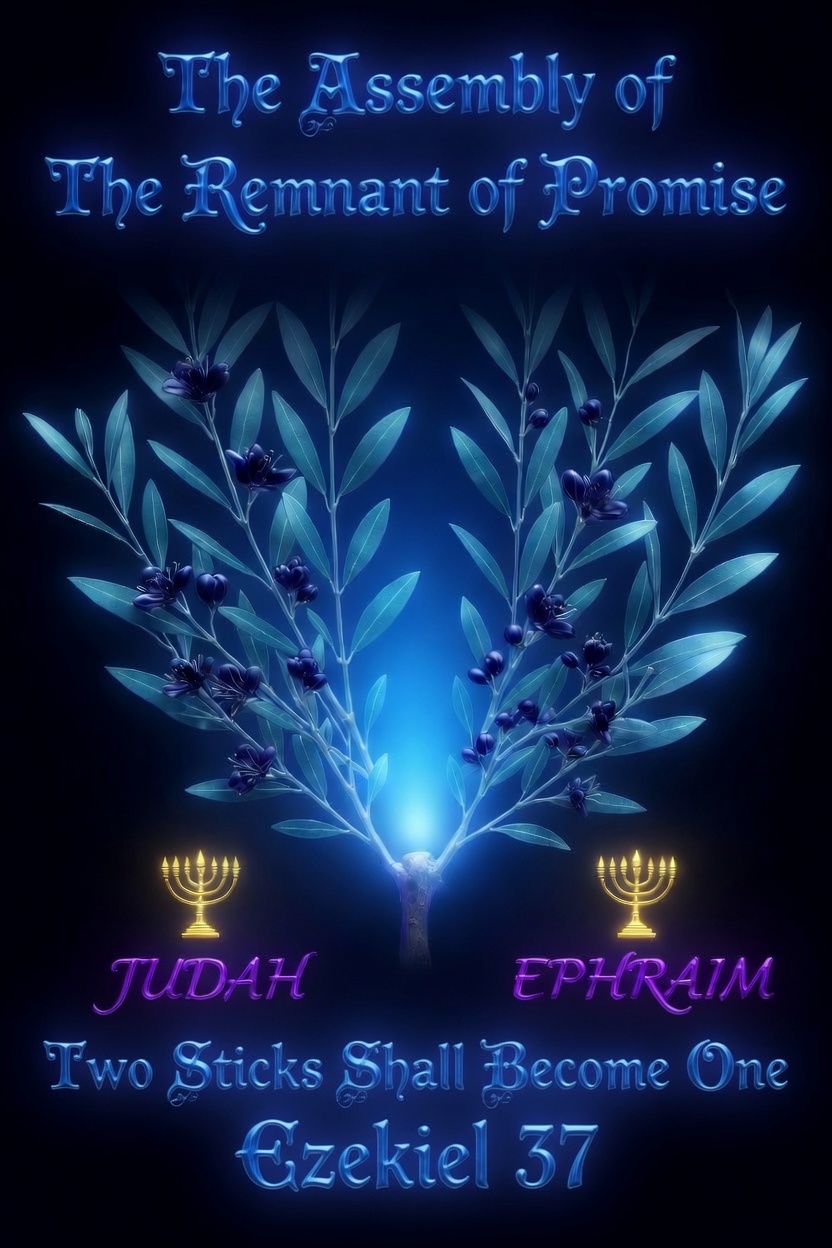
Remnant of Promise is an assembly. We use that word deliberately, the way the New Testament writers used it — ekklesia, the called-out gathering. Yashar’el (Israel) in the wilderness is described as the ekklesia in the wilderness in Acts 7:38, and the word means what it has always meant: the people who hear the call and come. Not a building. Not a denomination. Not a Sunday morning event. The gathered.
We are a teaching ministry. Yoshi is the under-shepherd. The work is to dismantle inherited deception with the Word read plainly, and to extend the invitation home for those Yahuah (God) is gathering. We hold to the prophets without flinching. We hold to Yahusha (Jesus) the Messiah (Christ) as the only way home to the Father. We hold the commandments Yahuah (God) gave because the Ruach HaKodesh (Holy Spirit) writes them on the heart of those he saves (Jeremiah 31:33; Ezekiel 36:27), not because keeping them earns anything.
There are books, growing in number across this body of work. There is a free blog. There is a frequently-asked-questions page that handles the most common objections directly. There will be a paid teaching tier, courses for those who want to walk further, sermon kits for pastors whose conscience has turned, and a Bible app under construction. All of it serves the awakening reader. None of it is a substitute for the Word.
Three things will catch your eye right away if you are new to this kind of ministry. They are not stylistic choices. Each one is a small restoration, and each one matters.
First, sacred names with parentheticals. When you read Yahuah (God) on every page, you are seeing the Father’s name restored where the historic English translations buried it under the LORD in capital letters more than six thousand times. When you read Yahusha (Jesus), you are seeing the Hebrew name his mother spoke — Yahuah saves — that the Greek transliteration Iesous and the eventual English Jesus are derivatives of. The parentheticals are there for you. They keep the names accessible to a reader meeting them for the first time, while honoring what the third commandment said about not bringing his name to nothing. Make mention that his name is exalted (Isaiah 12:4). We do.
Second, the word assembly instead of the inherited word for the gathering. The inherited English word carries seventeen centuries of accumulated meaning we are not bringing forward. Ekklesia means the called-out body, not the institutional shell that grew up around it. We are restoring the word the apostles used.
Third, three categories instead of two. The framework most readers inherited is Yahudi (Jew) and Gentile — Yahudah (Judah), and everyone else. The framework the prophets actually taught is three categories: Yahudah (Judah), the scattered seed of Yashar’el (Israel), and the nations. The ten northern tribes that Yahuah (God) divorced through the Assyrian captivity in 722 BC and dispersed among the nations until they forgot who they were (Jeremiah 3:8; Hosea 1:9) — they are not a metaphor and they are not gone. The prophets named them, traced them, and promised their restoration. The gathering of the twelve tribes is the whole point of the prophetic arc. The two-category binary erases it. The three-category framework recovers it.
You will meet other voice conventions as you read further. None of them are decoration. Every one of them is doing structural work.
In short form. Yahusha (Jesus) is the Messiah (Christ) of Yashar’el (Israel), the prophesied gatherer of the scattered, the Lamb whose blood opened the door home. Salvation is by grace through faith in him. The commandments still stand — not as a system to earn standing, but as the Way of life Yahuah (God) gave to his people, written on the heart of those he saves. Both houses of Yashar’el (Israel) — Yahudah (Judah) and the scattered seed — are being gathered, as the prophets promised. The nations have a real and beloved place in the covenant household as the Torah stranger and sojourner. The Sabbath is the Sabbath. The appointed feasts are appointed. The food categories Yahuah (God) called holy are holy. The extra-canonical witnesses (Enoch, Jubilees, Jasher, the Apocrypha, the Ezras, Baruch) were read by the early body and are worth reading again, alongside the canonical text, judged by Torah and the prophets.
The Statement of Faith on this site handles the framework in full. The frequently-asked-questions page handles the most common objections in short form. The blog is the conversation. The books are the long form.
We are not a denomination. We are not Hebrew Roots, Messianic, or Two-House — we share certain conclusions with each of those movements and we critique each of them where they carry inherited error. We are not Christian in the institutional or denominational sense, though we love and were once shaped by people inside the institutional structures, and we honor every sincere believer there. We hold no grudges against anyone. We aim no contempt at anyone. The system is one thing; the people inside it are another. They are the same lost sheep we were.
We are not gatekeepers. The Father gathers his own. We do not declare anyone’s lineage. We point to the One who knows.
If the Word is starting to read differently for you — if you are hungry for what the pulpit kept skimming over, if you have started to suspect that did Yahuah (God) really say? is being asked from places it should not be asked from — read with us.
You do not have to agree with everything before you start. You do not have to know what to do next. You do not have to commit to anything. Read. Test. Prove all things; hold fast that which is good (1 Thessalonians 5:21). The Ruach HaKodesh (Holy Spirit) is not in a hurry. He worked on us for years. He will work on you at the pace he chooses.
We are glad you are here. Welcome home.
A deeper dive — if the work has fed you