From the Work
There is a question that visits the awakening reader at some point. It does not always arrive as words. Sometimes it is the feeling that the Sabbath fits a shape inside you that you did not know was there. Sometimes it is the realization that you have been reading the prophets the way you read a love letter from someone you suddenly recognize. Sometimes it is the awareness that what the inherited pulpit told you about who you are has stopped feeling like the whole story.
The question, when it finally surfaces, sounds like this: Could the lost sheep be me?
This is the post that takes the question seriously.
The phrase comes from Yahusha (Jesus) himself. I am not sent but unto the lost sheep of the house of Yashar’el (Israel) (Matthew 15:24). He says it twice in Matthew alone — to the disciples in chapter 10 (go not into the way of the Gentiles, and into any city of the Samaritans enter ye not: but go rather to the lost sheep of the house of Yashar’el (Israel)) and to the Canaanite woman in chapter 15. The mission was specific. He did not come, in his earthly ministry, to the world at large. He came first to a particular flock that had a particular history.
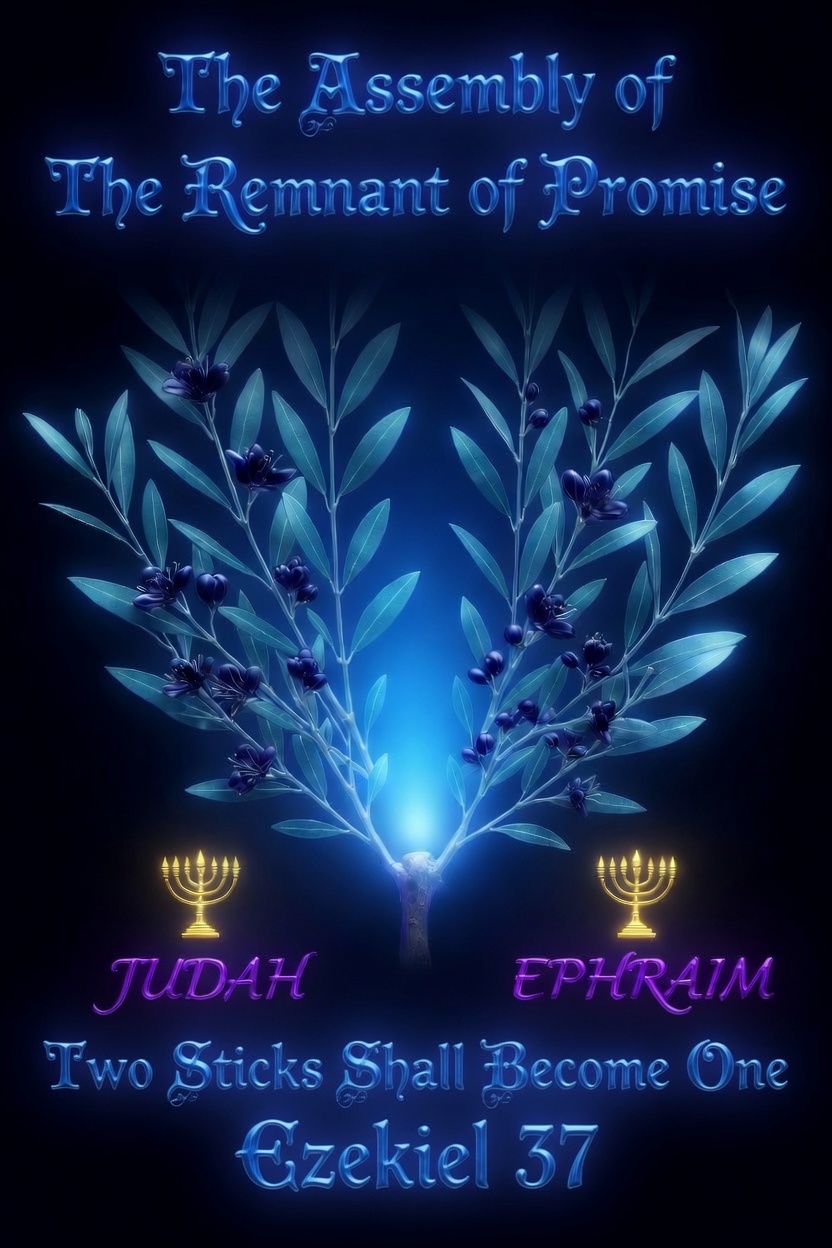
That flock is named in the prophets. The house of Yashar’el (Israel) is one of two houses Yahuah (God) divided after Solomon. The southern house, Yahudah (Judah), kept its identity through exile. The northern house — ten tribes, called Yashar’el (Israel), Ephraim, or the House of Joseph in different prophetic books — went into idolatry. Yahuah (God) divorced them. I had put her away, and given her a bill of divorce (Jeremiah 3:8). He scattered them through the Assyrian captivity in 722 BC into all the nations. He let them forget their language, their Torah, and their identity. Hosea named what happened to them in one terrible word: Lo-Ammi. Not my people.
Read the very next verse.
The same prophet, in the same chapter, says: I will divorce them, scatter them, take their identity. And in the place where it was said Ye are not my people, there it shall be said Ye are the sons of the living El.
That is the gathering. The lost sheep of Matthew 15:24 are the scattered seed of Hosea 1. Yahusha (Jesus) came to gather them. The gathering did not finish in the first century. It is happening now, by the same Father who promised it, through the Word he gave.
This is also why Paul went where he went. Paul writes to the Gentiles — but read who he says they are.
Paul quotes the same Hosea 1 verses to define the people he was being sent to. The “uncircumcision” that was Paul’s mission was the divorced northern house living as foreigners among the nations, having forgotten who they were. Paul was not bringing strangers into Yashar’el (Israel). He was bringing scattered Yashar’el (Israel) home.
Once you see this in Hosea and watch Paul cite Hosea exactly this way, the New Testament reads differently. The “Gentiles” in many of Paul’s letters are not random pagan converts. They are the lost sheep Yahusha (Jesus) said he was sent to. The divorced northern house, scattered, dispersed, indistinguishable from the nations, finally hearing their Shepherd’s voice through Paul’s mouth.
Now we come to the question the reader is actually asking: Is that me?
Here is where the inherited gospel and the prophets’ gospel run in opposite directions, and you have to feel the difference.
The inherited gospel says: if you hear and confess, you become a child of Yahuah (God). The hearing is the cause. The being is the effect. You make yourself a child of his by responding correctly.
The prophets’ gospel runs the other way. My sheep hear my voice, and I know them, and they follow me (John 10:27). The sheep hear because they are sheep. The voice does not make them sheep — it reveals them as sheep. They believe not, because they are not of my sheep (John 10:26). Yahusha (Jesus) said it plainly. Hearing is the effect. Being is the cause.
Read the next sentence carefully. If you hear, you are. You did not choose to hear and become. You heard because you are. Hearing reveals what was always true. It does not create what was not.
This changes the question entirely. Could the lost sheep be you? is not a question you answer by deciding. It is a question the Father has already answered, and the answer is showing up in your life as the sound of his voice making sense to you in places it should not have. The fact that the prophets are starting to read like a love letter to you. The fact that the Sabbath fits a shape you did not know was inside you. The fact that the inherited gospel has stopped sounding like the whole story.
This is not us declaring your lineage. We do not declare anyone’s lineage. We point at the Shepherd. The sheep hear the Shepherd. The Shepherd knows his own.
This is the right place to say a careful word about Romans 11. In Paul’s olive-tree allegory, the natural branches were broken off because of unbelief. The wild olive branches grew up away from the cultivated tree. The reading the inherited pulpit gave you is the Gentiles were grafted into Yashar’el (Israel) by faith — and the metaphor was used to say anyone who believes is now in the tree.
That is not what the chapter teaches. The wild olive branches are still olive — they are the same tree, the same root, the same covenant lineage growing wild in the lands of dispersion. They are the descendants of the natural branches that were broken off. Both branches on the tree are Yashar’el (Israel). The grafting in is the gathering of the scattered seed back into their own root, not the inclusion of unrelated peoples.
The journey home for the wild olive is the journey the prophets named. Gathered out of the nations (Ezekiel 37:21). Brought under the rod of refining and sifting (Ezekiel 20:37–38). Brought into the bond of the new covenant (Jeremiah 31:31). And then grafted into the natural root of the fathers (Romans 11:24). The grafting is the destination of the journey, not the doorway. The tree gathers its own.
The nations — those who are not of the paternal blood seed of Yashar’el (Israel) at all — have a real and beloved place in the covenant household as the Torah stranger and sojourner. The provision Torah makes for the foreigner who joins himself to Yahuah (God)’s people is genuine and the Father loves them. They are not the seed of promise; they are the welcomed friends inside the household. The distinction is real and the distinction is permanent and the prophets maintain it through the restoration.
Paul’s whole arc on this question lands at one verse, and we close with it.
We do not know. We will not pretend to know. The Father knows. The foundation of Elohim (God) standeth sure, having this seal, Yahuah (God) knoweth them that are his (2 Timothy 2:19).
What we can say is what we see. We see an awakening. We see men and women across every nation finding themselves drawn back to the Sabbath and the appointed feasts and the Word read plainly, in patterns no marketing department invented. We see the prophets coming true in real time. We see Hosea 1:10 happening — in the place where it was said unto them, Ye are not my people, there it shall be said unto them, Ye are the sons of the living El. The gathering is not future. It is in motion.
So: read the prophets. Read Hosea 1, and 2, and 3. Read Ezekiel 37. Read Jeremiah 31. Read Isaiah 11. Read Romans 9 through 11 with Hosea open beside it. Listen for the Shepherd. If the Word is making sense to you in places it should not — if the Lo-Ammi of Hosea 1 sounds personal, if the Ye are the sons of the living El of Hosea 1:10 quickens something in you — that is between you and him.
We cannot tell you who you are. The Father can. He always has, with anyone who would listen.
If the question could the lost sheep be me? has been forming in you, the Shepherd is the one who put it there. Take it to him.
A deeper dive — if the work has fed you