From the Work
Imagine four very different rooms.
In the first room, a worship band is playing. The walls are painted soft colors. A pastor in a blazer is preaching about how the believer is saved by grace alone, set free from the burdensome demands of the law, on his way to a home in the sky as soon as this earthly life is done. The cross is on the wall. The Bible on the lectern is open to a verse from Paul.
In the second room, a rabbi is teaching from the Torah scroll. Men in talliths are listening with respect. The teaching is rich, careful, anchored in fifteen centuries of rabbinic tradition. There is no Messiah at the front of this room. There is the Father, and there is Yahudah (Judah), and there are the nations — and the prophets’ promise that the scattered ten tribes would come home is not the framework anyone is using.
In the third room, a Hebrew Roots teacher is walking through the appointed feasts. People are wearing tzitzit. A shofar is on the table. The teaching is on the Sabbath, the food laws, the calendar of Leviticus 23. And underneath the teaching is an assumption — anyone who believes the Messiah and walks Torah is now Israel — that nobody is examining.
In the fourth room, men are bowed in prayer toward Mecca. The Quran is on the cushion. The covenant they hold is real to them. The covenant they hold is not the covenant Yahuah (God) actually swore. The lineage Genesis traces — Abraham, Isaac, Jacob, the twelve tribes — has been transferred in their tradition to Ishmael, against the explicit lineage Genesis carries.
Four rooms. Four very different services. Four different vocabularies, calendars, dress codes, teachers. The people in the rooms barely speak each other’s language.
And underneath all four rooms, the same skeleton: Yahuah (God) will not gather a paternal blood remnant of all twelve tribes of Yashar’el (Israel) home. The lie wears different costumes in different systems, but the bones are identical. Every system is denying the same thing the Father swore.
This essay walks the four rooms. Not to condemn the people in them — they are family in different rooms, and the verse the awakening reader speaks first applies to all of us: surely our fathers have inherited lies (Jeremiah 16:19). We dismantle the systems. We love the people. The systems are what this work undoes — never the souls inside them.
The pulpit the institutional Christian reader was raised in stands inside the system Daniel 7 named in advance. And he shall speak great words against the most High, and shall wear out the saints of the most High, and think to change times and laws (Daniel 7:25). The little horn of Daniel 7 thought to change times. The historical fingerprint is documented. Constantine moved the Sabbath to the day of the sun in 321 AD. The Council of Laodicea anathematized the seventh-day Sabbath keeper in 363 AD. The feasts of Leviticus 23 were renamed Jewish and replaced with Babylonian solar festivals dressed in nativity scenes and pastel rabbits. The dietary commandments of Leviticus 11 were declared fulfilled-away. The sacred name of the Father was buried under the LORD in capital letters. The body of Yahusha (Jesus) was renamed the church — a Greek word with no covenant pedigree — and the assembly was redefined as a metaphorical Yashar’el (Israel) that replaced the prophetic gathering of the actual twelve tribes.
The costume Christianity wears for the foundational lie is replacement. The promise the prophets made to the scattered ten tribes was rerouted to the assembly that voted itself the new Yashar’el (Israel). The seed Yahuah (God) named was declared retired. The verdict the institutional pulpit pronounced — you are the new Israel, the old Israel is finished, the promises are now ours — is the foundational lie wearing fourth-century Roman clothing.
The Christian in the pew did not vote at Nicaea. He did not preside at Laodicea. He inherited a thousand assumptions in the air of the room he was born into, and most of those assumptions are the air the system has been breathing for seventeen centuries. The grandmother who hung the cross loved the Father. The pastor in the blazer is preaching what he was taught at seminary. The system is what we name. The people, we love. Surely our fathers have inherited lies applies in the first room exactly as it applies in the others.
The second room carries different costumes for the same skeleton. The Yahudim (Jews) of Yahudah (Judah) are a real people with a real covenant lineage that they have carried through every fire that came for them — through Babylon, through Rome, through the Inquisition, through the Holocaust, through every century that tried to erase them. We do not deny what they have carried. We honor it. The covenant lineage of Yahudah (Judah) is real and is what Paul means when he says what advantage then hath the Yahudi (Jew)? much every way: chiefly, because that unto them were committed the oracles of Elohim (God) (Romans 3:1–2).
But the walls Judaism has built against the Messiah (Christ) and against the prophetic restoration of the scattered ten tribes are also real, and they are the costume the foundational lie wears in this room. The Talmudic and rabbinic traditions have layered over the Torah for centuries. Making the word of Yahuah (God) of none effect through your tradition (Mark 7:13) — Yahusha (Jesus) said that to the Pharisees of his own day, and the same line lands wherever tradition is laid on top of the older covenant in a way that contradicts it.
Judaism’s version of the foundational lie collapses the covenant into Yahudah (Judah) alone. There are no scattered tribes coming home; only Yahudim (Jews) and non-Jews remain. The house of Yahudah (Judah) claims the whole covenant, and the prophets who promised the gathering of the ten northern tribes are quietly overruled. The Yahudi (Jewish) believer who has carried Torah through every exile is loved. The system that erased his brothers from the covenant is not the same as him. The pulpits in this room have a different theological vocabulary than the pulpits in the first room. The skeleton is the same.
The third room is the one this work goes furthest into, because it is the room closest to truth and the room that therefore carries the most subtle version of the lie.
Hebrew Roots, Messianic, and Torah Observant believers walked out of institutional Christianity. They saw what the horn had moved. They put down the Sunday observance and picked up the Sabbath. They put down the substitute holidays and picked up Leviticus 23. They put down the the LORD substitution and picked up the Father’s name. All of those are good. All of those are the Spirit doing what the Spirit does in opening eyes. We honor every step.
But many of them carried Christianity’s foundations out the door without examining them, and three errors live on as inheritances.
The first is the false inclusion gospel. The teaching that anyone who believes and Torah-keeps is thereby counted as Yashar’el (Israel), regardless of paternal lineage or prophetic promise. It feels generous. It looks anti-exclusivist. It is Christian replacement theology wearing Torah clothing — the same substitution Babylon made, with a different group standing in Yashar’el (Israel)’s place. Where institutional Christianity collapsed Yashar’el (Israel) into the church, Hebrew Roots collapses Yashar’el (Israel) into the Torah-observant community. The architecture is identical: a paternal blood seed Yahuah (God) named is replaced by a credential anyone can perform.
The second is the Hebrew Roots version of replacement theology itself. The same logic of substitution, with a different substitute group at the center. The scattered seed of Yashar’el (Israel) is treated as a spiritual category open to self-selection by belief and practice rather than as the specific people the prophets named, traced, and promised to gather.
The third is the dropped Paul. Many Hebrew Roots believers cannot reconcile the twisted Paul they inherited with the Torah they love, so they drop Paul entirely. They are not wrong to feel the contradiction. They are wrong about the source of it. The contradiction is not Paul’s. It is the interpreter’s. Paul was a Torah-observant Israelite of the tribe of Benjamin who never abandoned the Torah, kept the Sabbath, kept the feasts, took Nazarite vows, and went into the Temple to pay for four men’s closing offerings in Acts 21. The Paul who abolished the Torah does not exist. Dropping the actual Paul leaves the inherited Paul uncontested in the pulpit they left.
The third room is the room closest to truth. That is exactly why this work spends so much of its energy here. The reader who has come this far has eyes that are seeing. We do not want him to stop with eyes half open. The skeleton has to come out from under this room’s costume too, or the awakening stops in a different version of the same lie.
The fourth room is the one institutional Christianity rarely walks into, but the foundational lie sits in this room as plainly as it sits in the others. Islam denies the covenant’s attachment to Isaac and Jacob entirely, transferring it to Ishmael — against the explicit lineage of Genesis. And as for Ishmael, I have heard thee… but my covenant will I establish with Isaac (Genesis 17:20–21). The Father said exactly which son the covenant followed. Islam’s tradition rerouted it.
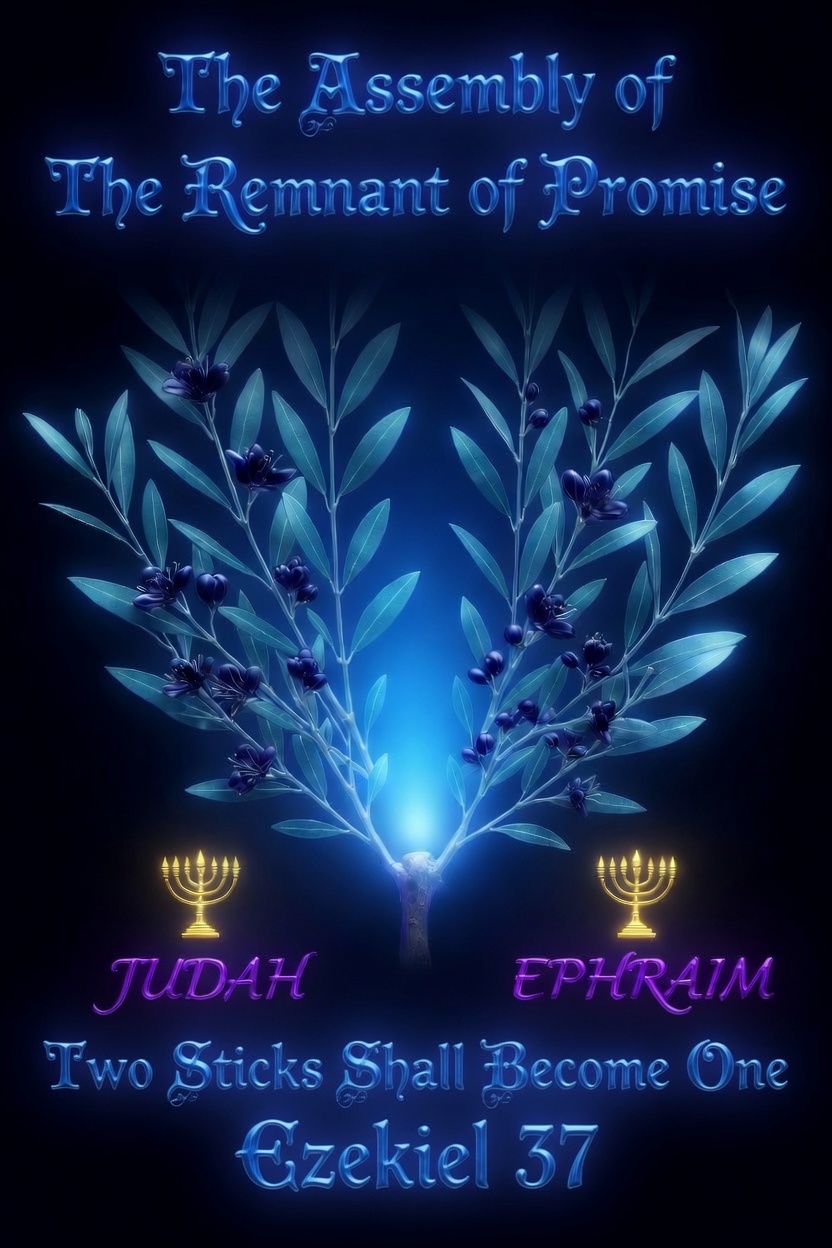
The twelve-tribe restoration is denied. The prophetic specificity of Isaiah 11, Jeremiah 31, Ezekiel 37, and Hosea 1 is overruled in favor of a transferred covenant the prophets do not carry. The Muslim at his prayers is loved. He believes what he was taught. He inherited what he was given. The verse applies to him too — surely our fathers have inherited lies. The system that handed him the transferred covenant is the foundational lie wearing the fabric of a different empire than the one Constantine ran.
This is not Islamophobia. This is naming a system on the same terms we name the other three. The same care, the same patience, the same love for the person in the room. We dismantle the inherited systems of false teaching; we love the people who were handed them. Yahuah (God)’s sheep are in the fourth room too. Other sheep I have, which are not of this fold: them also I must bring (John 10:16). The Shepherd is calling there too.
The pulpit the inherited Christian reader was raised in trained him to look for the antichrist on a future throne — a single man, late in history, doing identifiable things on a televised stage. The picture is not what scripture is doing.
Many antichrists — that is John’s plural (1 John 2:18). Even now are there many antichrists. The antichrist is not first a person. It is a posture. It is the system, in any system, that calls Yahuah (God) a liar by denying what he promised, that strips the gathering out of the gospel, that recasts the seed the prophets named as something else. And every spirit that confesseth not that Yahusha (Jesus) Messiah (Christ) is come in the flesh is not of Elohim (God): and this is that spirit of antichrist, whereof ye have heard that it should come; and even now already is it in the world (1 John 4:3).
In the seat of Yahuah (God) — overruling him on his own promise — sits the antichrist system. Whichever system has voted itself into that seat carries the antichrist costume. Sitteth in the temple of Elohim (God), shewing himself that he is Elohim (God) (2 Thessalonians 2:4). The temple here is the body. The seat is the place of authority over what the Father said. Whichever pulpit speaks over Yahuah (God) and overrules him on the gathering is the seat the antichrist system holds.
All four costumes do it. All four therefore wear the antichrist costume to the degree they deny the gathering. The people inside any of them are not the antichrist. They are victims of it. The grandmother in the first room, the rabbi in the second, the Hebrew Roots teacher in the third, the Muslim in the fourth — all four are the lost sheep the Shepherd is calling. The system over them is what we name.
The four costumes are real. The systems are real. The lie is real, and the lie has worn its costumes for a long time. None of that is overstated.
But the gathering is real too. The Shepherd is calling out of every system. The seed Yahuah (God) named is being recovered. I will gather them from all the countries, whither I have driven them in mine anger, and in my fury, and in great wrath; and I will bring them again unto this place (Jeremiah 32:37). The pulpit will say it cannot be. The Father is doing it anyway.
So the posture toward the four rooms is the same posture in all four. Patience toward the people. Plain naming of the systems. The trumpet blown for any reader who can hear it. The verses laid out for any who will look. The Shepherd’s voice doing what the Shepherd’s voice has always done — calling his own sheep by name, in whichever room they currently sit, leading them out (John 10:3).
If you are reading this from inside any of the four rooms — and most readers are — the verse applies to you the same way it applies to us. Surely our fathers have inherited lies. The inheritance landed on you. You did not choose it. The Father is undoing it now, in his own time, by his own hand. He is not in a hurry.
Read the prophets. Test the framework. Walk the road with the Father. The four costumes are not your home. The Father is.
A deeper dive — if the work has fed you