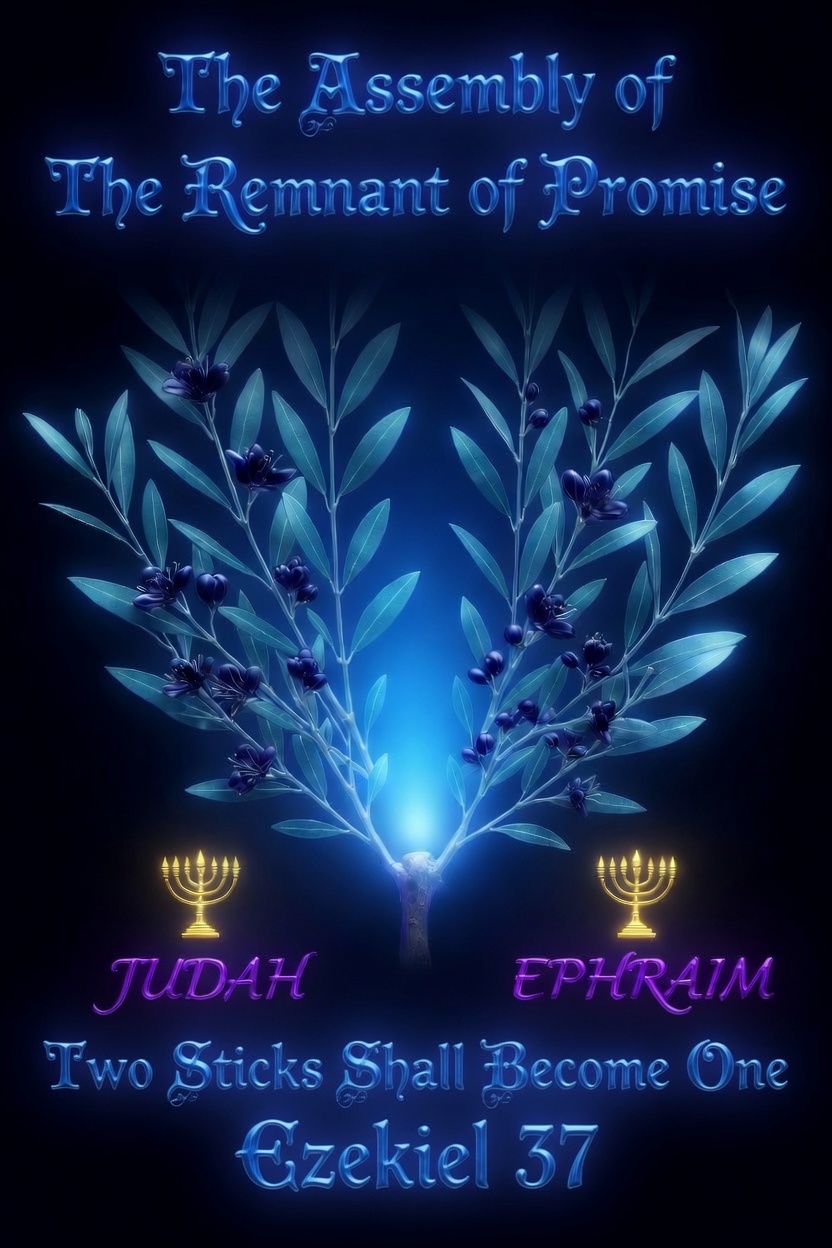
A Deeper Dive — Statement of Faith §XII
The expanded apologetic for §XII of the Statement of Faith — what most preachers teach on this subject, where the inherited reading falls short of scripture, and how the framework reads the same scripture faithfully.
Romans 11 is one of the most misread chapters in scripture. The inherited Christian pulpit treats it as the covenant theology cornerstone — the chapter where Paul explains how Gentiles are grafted into the people of Yahuah (God) by faith, replacing or joining a previously Yahudi-only (Jewish-only) covenant family.
The standard reading goes roughly: the Yahudim (Jews) were the natural branches; many of them rejected the Messiah (Christ); they were broken off because of unbelief. The Gentiles, formerly outsiders, are now grafted in by faith into the Yahudi (Jewish) olive tree. The Gentile believer becomes part of spiritual Israel through grafting. Some Yahudim (Jews) will be saved at the end, when all Israel shall be saved refers to a future mass conversion of ethnic Jews to Christianity. The chapter is read as a manual for understanding how the church relates to Israel — sometimes producing replacement theology (the church replaced Israel as the natural-branch position), sometimes producing dispensational theology (Israel’s program is suspended, the church’s program is running, Israel’s program will resume), sometimes producing covenant theology (the church is the true Israel composed of Jews and Gentiles together).
Around this center, four secondary teachings cluster:
The natural branches are read as the Jews — a presently existing ethnic-religious group. The wild olive branches are read as the Gentiles — non-Yahudi (non-Jewish) people of any nation. The grafting is read as the immediate spiritual incorporation of a believing Gentile into the covenant family at conversion. The reader who believes, regardless of paternal lineage, is read as a wild olive branch grafted into the covenant root by faith alone.
The northern tribes — the divorced house of Yashar’el (Israel), scattered through the Assyrian exile — are absent from the inherited reading of Romans 11. The chapter is read as Jews and Gentiles with no awareness that the prophetic frame Paul is operating in includes the divorced northern house living among the nations. The fact that Paul cites Hosea 1:10 in Romans 9:25–26 (the chapter before, in the same continuous argument) to identify his audience as the divorced house being recovered is folded into Gentile inclusion language and the connection to Romans 11 is lost.
All Israel shall be saved (Romans 11:26) is read as either (a) a future mass conversion of ethnic Jews to faith in the Messiah (Christ) at the end of the age, in dispensational schemes; or (b) the totality of believing Jews and Gentiles together as spiritual Israel, in covenant theology schemes. In neither reading is all Israel the prophetic gathering of the twelve tribes — both houses, the full paternal seed — that Hosea, Isaiah, Jeremiah, and Ezekiel actually named.
The hearing of the gospel is taught as the cause that produces sonship. Hear the gospel, believe, become a child of God. The cause-and-effect runs from hearing to becoming. The fact that John 10:26 places the cause-and-effect in the opposite direction — ye believe not, because ye are not of my sheep — is folded into a doctrine of total depravity that explains the rejection but does not invert the cause-and-effect for the receiving.
This is the gospel the awakening reader was handed about Romans 11. The chapter most directly addressing the gathering of the divorced house was repurposed into the chapter on Gentile incorporation, with the divorced house disappearing from the page.
The reading collapses against Paul’s own argument across Romans 9–11, against the prophets he is citing, against the audience he is writing to, and against the cause-and-effect direction John clearly establishes.
Romans 9–11 is one continuous argument. Paul does not start a new topic in chapter 11. He is continuing the question he raised at the start of chapter 9 — I say the truth in Messiah (Christ), I lie not, my conscience also bearing me witness in the Ruach HaKodesh (Holy Spirit), that I have great heaviness and continual sorrow in my heart. For I could wish that myself were accursed from Messiah (Christ) for my brethren, my kinsmen according to the flesh: who are Israelites (Romans 9:1–4). The audience and the question are named at the start. His brethren, his kinsmen according to the flesh — the Israelites. The whole argument from chapter 9 through chapter 11 is about the gathering of his fleshly kindred — both houses of the covenant — not about the inclusion of unrelated Gentiles into a new spiritual people.
In chapter 9, Paul cites Hosea 2:23 and Hosea 1:10 to describe his audience: I will call them my people, which were not my people; and her beloved, which was not beloved. And it shall come to pass, that in the place where it was said unto them, Ye are not my people; there shall they be called the children of the living Elohim (God) (Romans 9:25–26). Hosea named the audience — the divorced northern house. Paul names them as the audience he is being sent to. The same audience continues into chapter 11. The wild olive branches Paul will describe in chapter 11 are not unrelated Gentiles. They are the descendants of the divorced house being recovered, named by the prophet Paul has just cited.
Paul names himself an Israelite of the tribe of Benjamin (Romans 11:1) precisely to refute the question hath Yahuah (God) cast away his people? He is evidence that the Father has not cast away his people — Paul himself is one of the people, of one of the tribes, of the seed of Abraham, of the tribe of Benjamin. The people the chapter is about are Abraham’s seed by paternal lineage. The chapter does not discuss anyone else.
The natural branches do not exist as a presently active group. The natural branches are Abraham, Isaac, and Jacob, the patriarchs and the faithful covenant lineage carried through them — and they are broken off in Paul’s tense. Both houses fell into unbelief and were broken off. The northern house was divorced through the Assyrian exile. The southern house went into the Babylonian exile, partially returned under Ezra and Nehemiah, but the partial return was not the prophetic ingathering of all twelve tribes the prophets had promised. Herod’s temple at the Messiah’s first coming and the modern state of Israel today represent the same kind of partial return — visible Yahudim (Jewish) presence in the land while the body of the covenant people remains scattered and the prophetic gathering is still future. The natural branches the chapter describes are the faithful patriarchs awaiting the resurrection (Hebrews 11:39–40; Romans 11:24; Revelation 20:4–6) and the broken-off who died still in unbelief, to whom the proclamation came in their state — the dead shall hear the voice of the Son of Yahuah (God): and they that hear shall live (John 5:25; cf. 1 Peter 3:18–20; 4:6). They are not a living group today.
The wild olive branches are us — the living descendants of the broken-off. Both modern Yahudah (Judah) and modern scattered seed of Yashar’el (Israel) are children of the broken-off, grown wild among the nations through centuries of exile. Paul’s thou, being a wild olive tree, wert graffed in among them, and with them partakest of the root and fatness of the olive tree (Romans 11:17) is addressed to the audience he has been writing to since chapter 9 — the Israelites being recovered. The wild olive does not signify a non-Yashar’el-descended (non-Israel-descended) Gentile being added to the tree. It signifies the descendant of the broken-off who is living among the nations, growing wild, and being recovered to the natural root of the patriarchs. Both branches on the tree are Yashar’el (Israel). No non-olive branch is grafted into the tree.
The cause-and-effect runs the way Yahusha (Jesus) lays it down. My sheep hear my voice, and I know them, and they follow me (John 10:27) — but ye believe not, because ye are not of my sheep (John 10:26). If you hear when the Shepherd calls, that is because you are his sheep. The hearing reveals what was always true. The inherited reading inverts the cause-and-effect: if you hear and confess, you become a child of Yahuah (God). Scripture says: if you are a child of Yahuah (God), you will hear when he calls. Election precedes hearing. Lineage precedes response. The names written in the Lamb’s book of life from the foundation of the world (Revelation 13:8; 17:8) confirm the same. Names cannot be added after the foundation; names can only be blotted out (Exodus 32:33; Revelation 3:5). The Father does not threaten to remove what was never written.
The Galatian agitator’s gospel — anyone who joins by faith and Torah-keeping is now Yashar’el (Israel) — is what Paul is writing against in Galatians and clearing the way out of in Romans 11. The wild olive branches Paul describes in Romans 11 are not included by faith into a tree they were never on. They are recovered to a tree their forefathers’ branches were on. The grafting in is the journey’s destination, not the doorway. Paul’s prior chapter (Romans 9) names the audience as the divorced. The chapter Paul is writing (Romans 11) names the journey home of the divorced and their descendants. The chapter that follows (Romans 12) describes how the recovered live. The continuity refuses the inherited reading’s substitution.
The seed war from Genesis 6 runs within every people, including within the broken-off. Among the descendants of the broken-off — both modern Yahudah (Judah) and modern scattered seed — there are sons of Adam (whose names were written in the Lamb’s book of life from the foundation of the world) and tares (woven in by the fallen watchers). The sons of Adam can hear when the Shepherd calls because they are sheep. The tares cannot, because they are not. They believe not, because they are not of my sheep (John 10:26). The harvest of Matthew 13:30 separates wheat from tares — the tares are bound and burned because they were never wheat. The gathered wheat then passes through the wilderness sifting Ezekiel 20:34–38 names — chaff from kernel, goats from sheep, the unfruitful from the fruitful. The journey from broken-off to grafted-in is the journey of those whose names were written, hearing the Shepherd, being gathered out of the nations, brought under the rod, purged of rebellion, brought into the bond of the new covenant, and grafted at journey’s end into the natural root of the patriarchs.
All Israel shall be saved (Romans 11:26) is the closing scripture for any Romans 11 reading. All Yashar’el (Israel) — both houses, the full twelve tribes the prophets named — gathered home through the journey the prophets walked out, sealed at the end by the Deliverer who comes out of Tsion (Zion) and turns away ungodliness from Jacob. The inherited reading collapses all Israel into the totality of believing Jews and Gentiles and erases what Paul has been describing for three chapters. Scripture refuses the collapse.
The framework reads Romans 11 the way Paul wrote it, in the prophetic frame Paul established in Romans 9, with the audience he names, and with the cause-and-effect Yahusha (Jesus) himself laid down. Both houses of the covenant, the wild olive descendants of the broken-off, the multi-stage journey home, the grafting at journey’s end. We did not invent this reading; we are recovering it from the page the inherited pulpit had read backward.
The covenant began with one man and his sons. Abraham, Isaac, Jacob, and the twelve tribes that came from Jacob. The seed Yahuah (God) named, traced, and promised to keep. After Solomon, the kingdom split. Ten tribes pulled north under Jeroboam and became the House of Yashar’el (Israel) — also called Ephraim, also called the House of Joseph. Two tribes plus portions of Levi held south as the House of Yahudah (Judah). The names scripture uses for the two houses are not interchangeable. They are the covenant’s actual shape.
Both houses fell into unbelief and were broken off. The northern house went into the Assyrian captivity in 722 BC. Yahuah (God) shall scatter thee among all people, from the one end of the earth even unto the other (Deuteronomy 28:64). They lost the language. They lost the Torah. They lost the name they had been given. Lo-Ammi — not my people (Hosea 1:9). The southern house went into the Babylonian captivity, partially returned under Zerubbabel, Ezra, and Nehemiah, and rebuilt the second temple — but the partial return was not the prophetic ingathering of all twelve tribes. Herod’s temple and the modern state of Israel both represent partial returns of Yahudah (Judah) without the full ingathering Isaiah 11:11–12 promised. Both houses’ broken-off branches awaited recovery.
The natural branches are not a living group today. They are the covenant lineage of Yashar’el (Israel) — the line of Adam carried forward through the patriarchs into the twelve tribes. The forefathers who walked the covenant faithfully in their lifetimes — Abraham, Isaac, Jacob, Moses, David, the prophets, the faithful unnamed of every generation back — are asleep, awaiting the resurrection. They are the natural branches whom Yahuah (God) is able to graft in again at the first resurrection (1 Thessalonians 4:15–17; Hebrews 11:39–40; Revelation 20:4–6; Romans 11:24). Even Paul did not presume on attaining the first resurrection (Philippians 3:11) — it is conditional on faithfulness, not automatic on lineage.
For the broken-off who died still in unbelief, the proclamation came to them too. Yahusha (Jesus) descended to the dead and preached (1 Peter 3:18–20; 4:6; John 5:25 — the dead shall hear the voice of the Son of Yahuah (God): and they that hear shall live). Those who could hear ceased to abide in unbelief and can be grafted in. Those who could not hear remained as they were and face the second resurrection of judgment.
The seed war from Genesis 6 runs within every people. Among the broken-off — and among the wild olive descendants today — there are sons of Adam (whose names were written in the Book of Life from the foundation of the world, Revelation 13:8; 17:8) and tares (woven in by the fallen watchers). The sons of Adam can hear when the Shepherd calls because they are sheep. The tares cannot, because they are not. They believe not, because they are not of my sheep (John 10:26–27).
The cause-and-effect reversal that distinguishes the truth from the inclusion gospel. If you hear, you are sons of Abraham. You are sons of Adam. You are the seed of promise. You are heirs of the covenant. You did not choose to hear and become these things. You heard because you are these things. Hearing does not make you. Hearing reveals what was always true. The inherited pulpit says if you hear and confess, you become a child of Yahuah (God). Scripture says if you are a child of Yahuah (God), you will hear when he calls. Election precedes hearing. Lineage precedes response.
No name is added after the foundation of the world. Names can only be blotted out (Exodus 32:33; Psalm 69:28; Revelation 3:5) — and the warning to be blotted out is given to the wheat, not to the tares. Yahuah (God) does not threaten to remove what was never written. The tares cannot become wheat by trying; the wheat can lose its place by lawlessness.
The harvest separates wheat from tares; the gathered wheat passes through the post-harvest sifting. Matthew 13:30 separates wheat from tares at the harvest. The tares are bound and burned because they were never wheat. The wheat is gathered out of all nations (Ezekiel 37:21) into the wilderness (Ezekiel 20:35). The harvest is not the end of the sorting. The gathered wheat passes through a second sifting — chaff from wheat, goats from sheep, the unfruitful from the fruitful (Ezekiel 20:37–38; Matthew 25:32; Luke 3:17). Names get blotted out in this post-harvest sifting. Many will say to me in that day, Lord, Lord… and then will I profess unto them, I never knew you: depart from me, ye that work iniquity (Matthew 7:22–23) is spoken to wheat that did not bear fruit — not to tares.
The wild olive branches are us — the living descendants of the broken-off. Both modern Yahudah (Judah) and the modern scattered seed of Yashar’el (Israel) are children of the broken-off. The wild olive does not partake of the root by mere faith-confession in this age. The wild olive comes home through the journey the prophets named: gathered out of the nations (Ezekiel 37:21) → brought under the rod (Ezekiel 20:37) — where the rod sifts and purges out the rebels (Ezekiel 20:38) → brought into the bond of the new covenant (Jeremiah 31:31) → and then grafted into the natural root of the fathers (Romans 11:24). The grafting is the destination of the journey. Not the doorway.
The destination of the journey is a kingdom of priests (Exodus 19:6; Isaiah 61:6; Revelation 1:6; 5:10) for the other nations who are left alive after the harvest. Those nations did not pass through the wheat-sifting because they were never wheat. They await the instruction of the priestly remnant during the millennial reign of the Messiah (Christ) on the earth. The remnant is sifted into the priestly office; it is not self-appointed.
The covenant place of the nations is the Torah stranger and sojourner during the journey home — welcomed, loved, sustained by the provisions Torah makes for the foreigner who joins himself to Yahuah (God)’s people, but never becoming the seed of promise. Their place in the millennial kingdom is to receive instruction from the priestly remnant.
The closing scripture for any Romans-11 treatment. And so all Yashar’el (Israel) shall be saved: as it is written, There shall come out of Tsion (Zion) the Deliverer, and shall turn away ungodliness from Jacob (Romans 11:26). All Yashar’el (Israel) — both houses, the full twelve tribes the prophets named — gathered home through the journey the prophets walked out, sealed at the end by the Deliverer who came out of Tsion (Zion). The full architectural treatment of this restoration lives in Ephraim Rising, the book Yoshi wrote on the keystone. Here is the SoF’s testimony.
The inherited pulpit lost the divorced house, lost the journey, lost the cause-and-effect direction, and lost the closing scripture. The framework recovers all four. Yahuah (God) hath not cast away his people which he foreknew (Romans 11:2). The seed the prophets named is being gathered. The grafting at the journey’s end is what the Father is building. We are watching it.
Layer 3 expansion complete. Drafted with explicit care against Red Line #11. The doorway opens to the long form’s §X (The Three Categories), §XI (The Judaizer Error), and §XX (Eschatology) for the deeper treatment of the journey, the harvest, and the post-harvest sifting. The book Ephraim Rising carries the full architectural treatment of the keystone.